
Last updated November 2, 2026
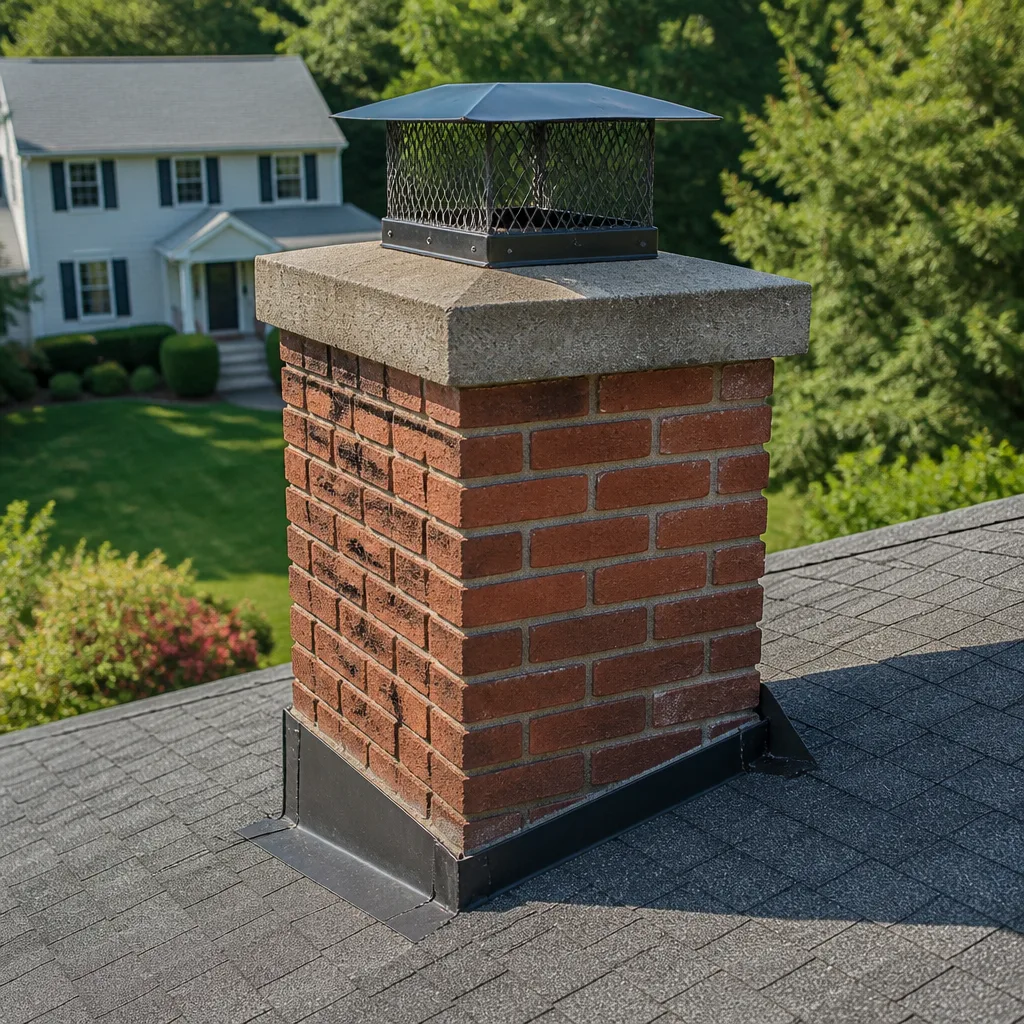 Sweep & inspection
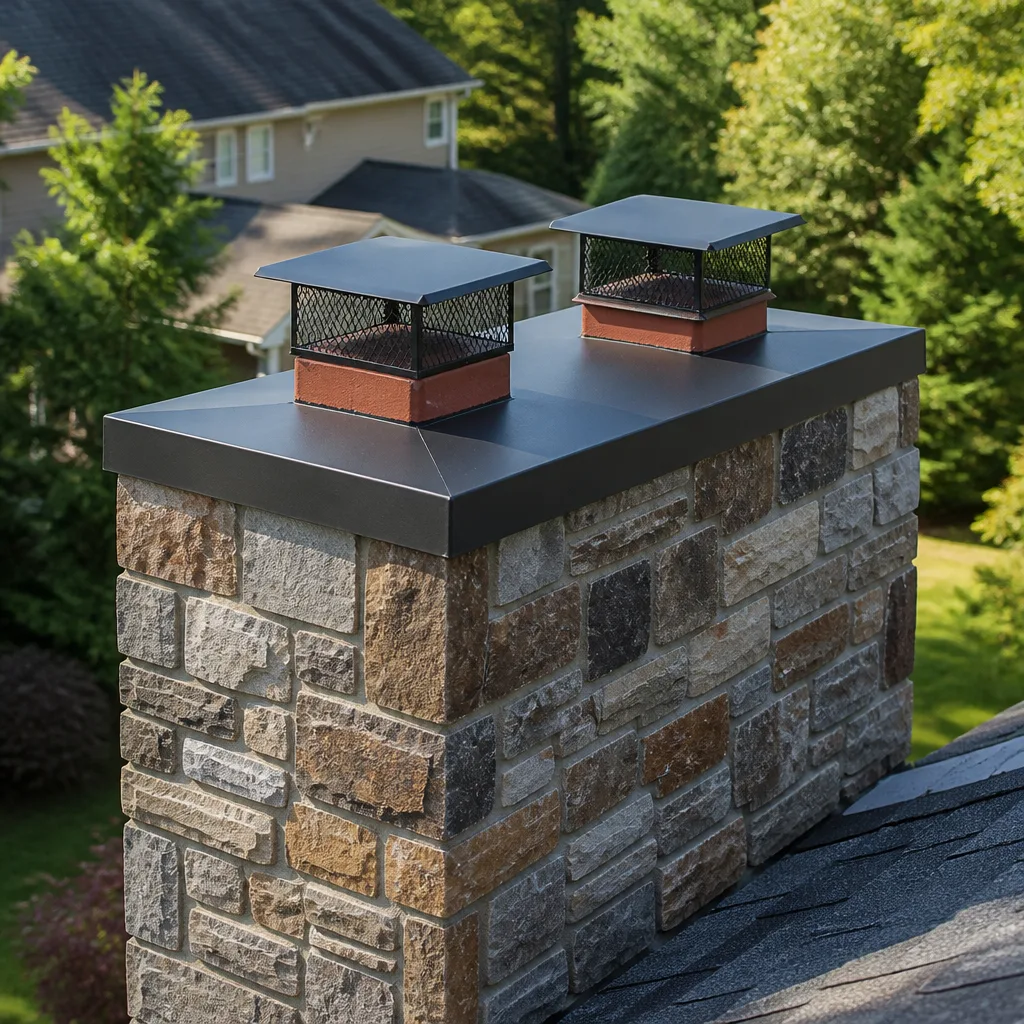 Caps & crowns
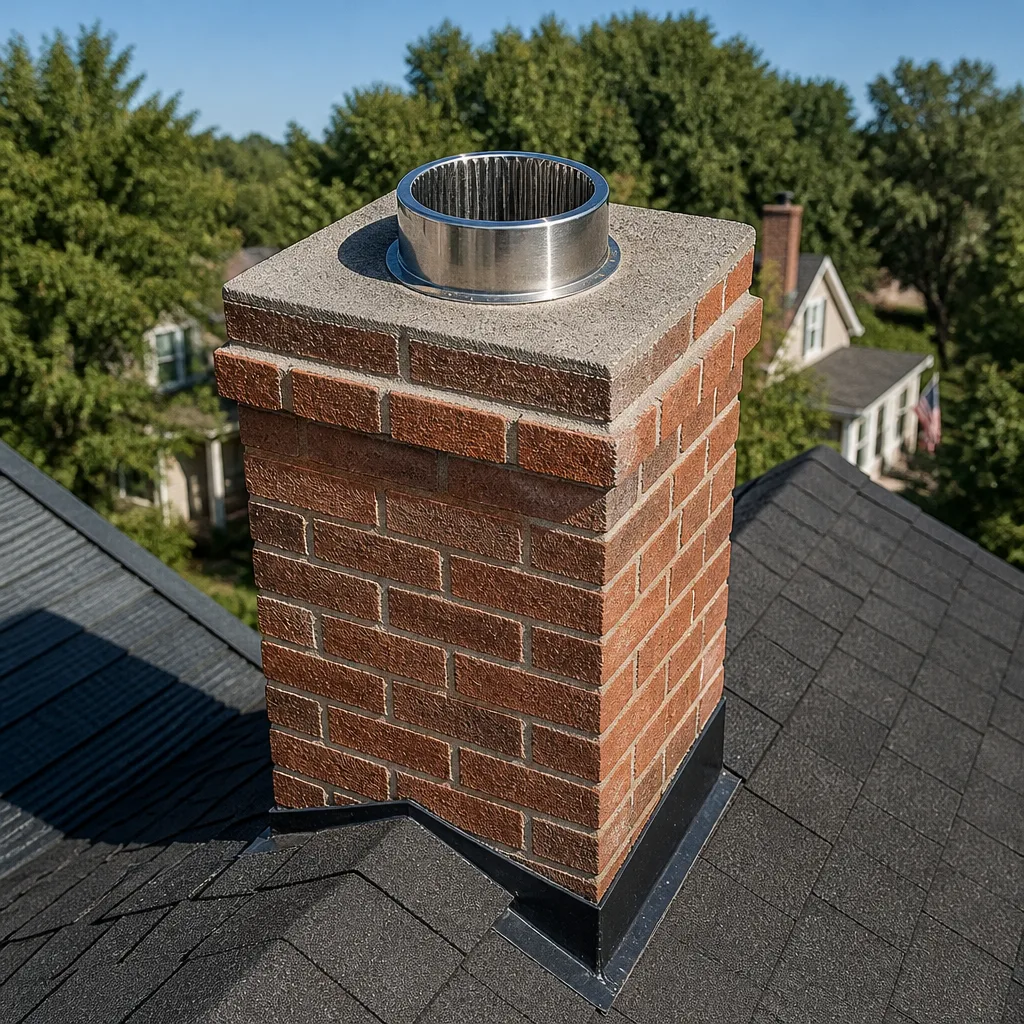 Flue relining
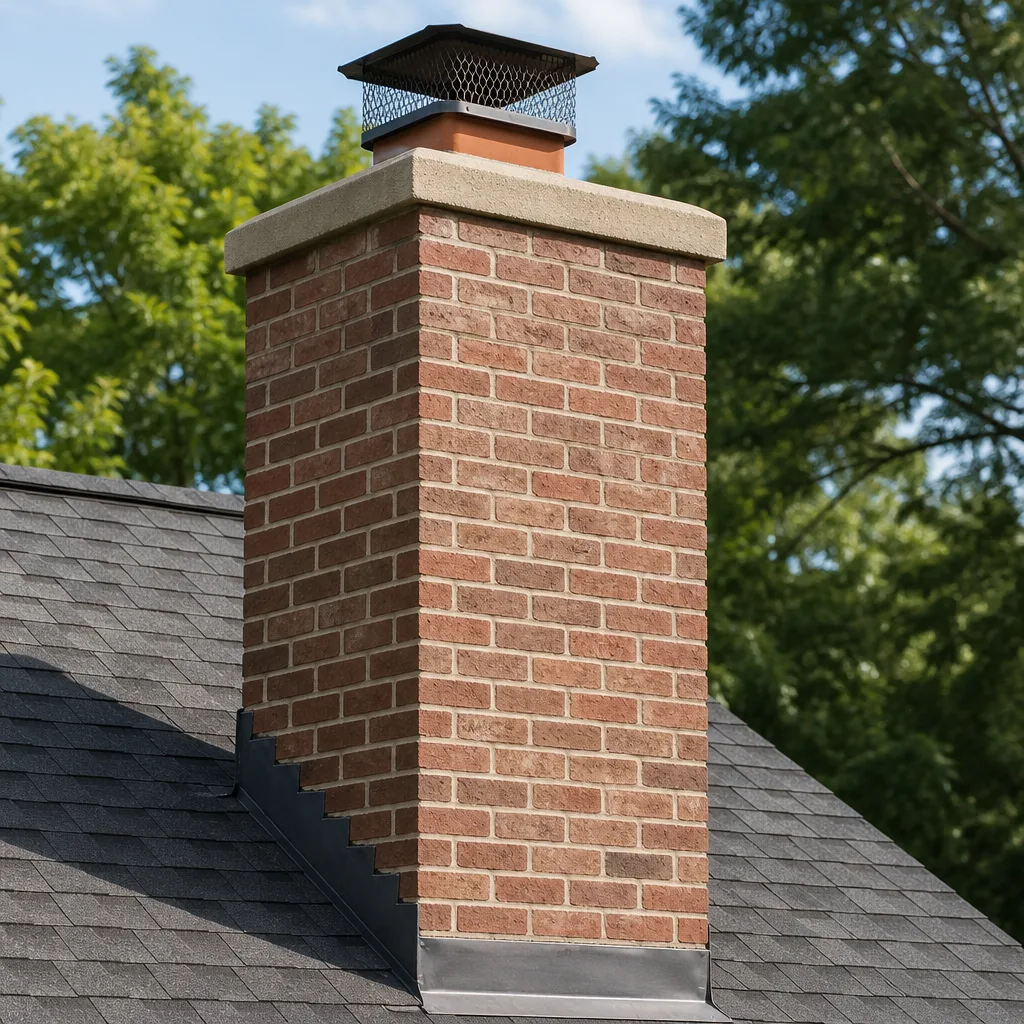 Masonry repair
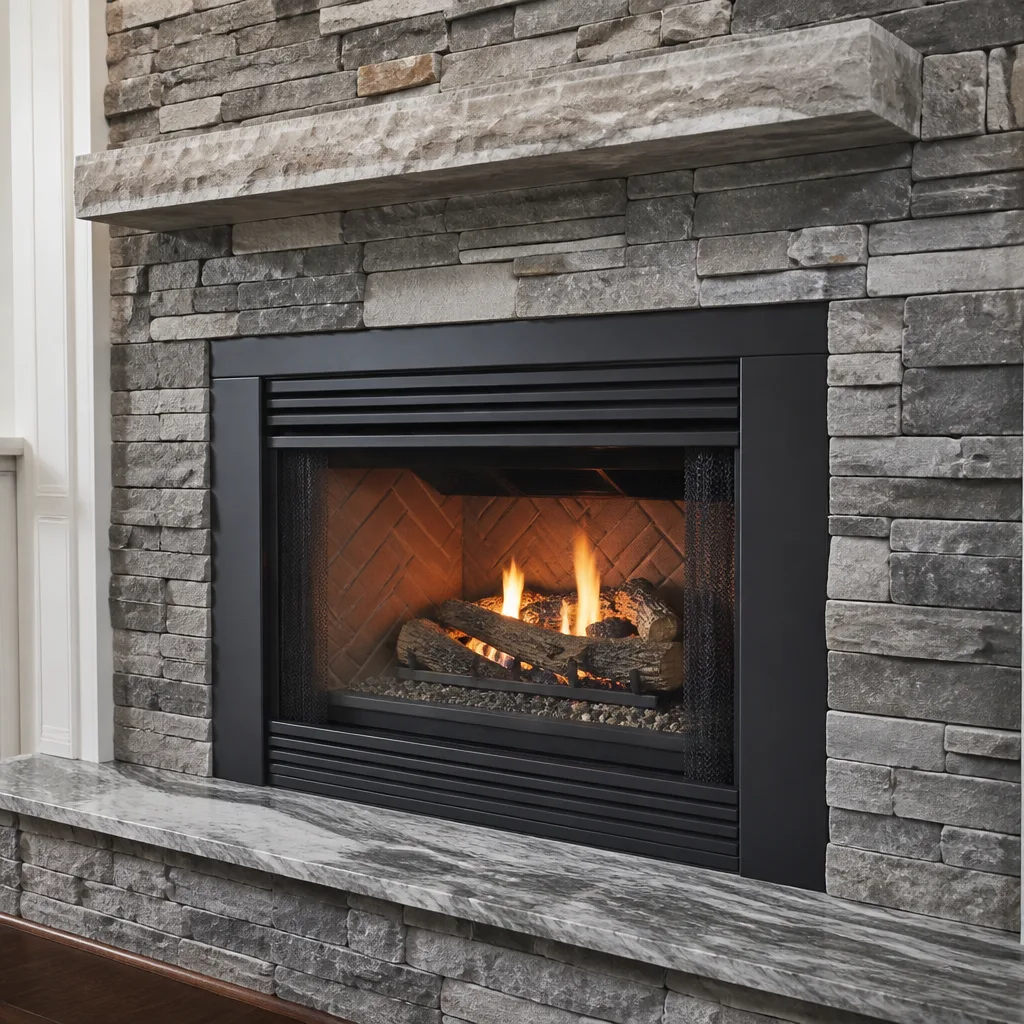 Gas fireplace service
Level 1 sweep and inspection to the NFPA 211 annual standard - flue, crown, cap, and flashing checked and photographed
Chimney sweep logs do not sweep chimneys. They loosen some creosote - which then falls where a brush and vacuum still have to collect it.
Seasonal Chimney Cleaning Care for La Habra: Year-Round Homeowner’s Guide
Most chimney maintenance guides assume a homeowner in Vermont or Minnesota: snow on the roof, five months of nightly fires, creosote building up like clockwork. La Habra doesn’t work that way. You might light fifteen fires a year, perhaps fewer. But here’s what surprises most local homeowners when we open their flues in March: a chimney that saw light use in a mild climate can still hold glazed creosote, water-damaged mortar, and a rust-pitted damper. Intermittent burning plus La Habra’s marine layer mornings and Santa Ana dry spells creates its own maintenance calendar, and this guide rebuilds the year for exactly those conditions. You’ll learn when to sweep, what to inspect each season, and why the traditional “fall-only” advice falls short in Orange County’s fireplaces.
Styles & brands we work with
- Sweep & inspection
- Caps & crowns
- Flue relining
- Masonry repair
- Gas fireplace service
Quick Answer
In La Habra, the practical chimney maintenance year runs like this: sweep and inspect in late spring (March through May, after the burn season ends and before June gloom moisture settles in), verify caps and crowns in summer (July through August, ahead of Santa Ana winds), complete any pre-season repairs in September, and monitor combustion during winter’s intermittent burn windows. If you do one thing each year, schedule a Level 1 sweep and inspection between March and May, because a dirty flue left through the summer absorbs marine-layer humidity and hardens deposits into a glaze that costs more to remove.
Table of Contents
- Spring in La Habra: Why March to May Is the Real Sweep Season
- Summer: Cap, Crown, and Santa Ana Preparation (Not Temperature)
- Fall: The Pre-Season Sweep and the October Ignition Window
- Winter: Reading Combustion Signs in an Intermittent-Burn Household
- Year-Round: How Olympia Chimney and Famco Components Hold Up to UV and Temperature Swings
- What to Check Yourself (Without Getting on the Roof)
- What Seasonal Chimney Care Costs in La Habra
- Common Mistakes to Avoid
- When to Call a Professional
- Frequently Asked Questions
- The Bottom Line
Spring in La Habra: Why March to May Is the Real Sweep Season
Talk to any experienced sweep in La Habra and they’ll tell you the same thing: fall is when everyone calls, but spring is when the smart work gets done. The logic is straightforward once you understand local weather. Your fireplace stops getting used around March. Within weeks, the marine layer returns, pushing morning humidity into the 70s and 80s. A flue that holds even a thin layer of soot and creosote becomes a sponge for that moisture. Creosote absorbs water, expands, and then bakes down as temperatures warm. By June, what started as a brushable deposit has often hardened into a tacky glaze that resists standard sweeping. The spring sweep removes it while it’s still fresh.
There’s a scheduling advantage too. In March, April, and early May, chimney service companies in La Habra are running at about half their fall volume. That means you’re more likely to get a morning appointment, a thorough inspection, and same-visit repair capability if the tech finds a cracked flue tile or a failing cap. Compare that to October, when every sweep in Orange County is booked two to three weeks out and the first cold snap has every fireplace owner calling in the same week.
What we actually do on a spring visit is more than brushing. The full workflow includes:
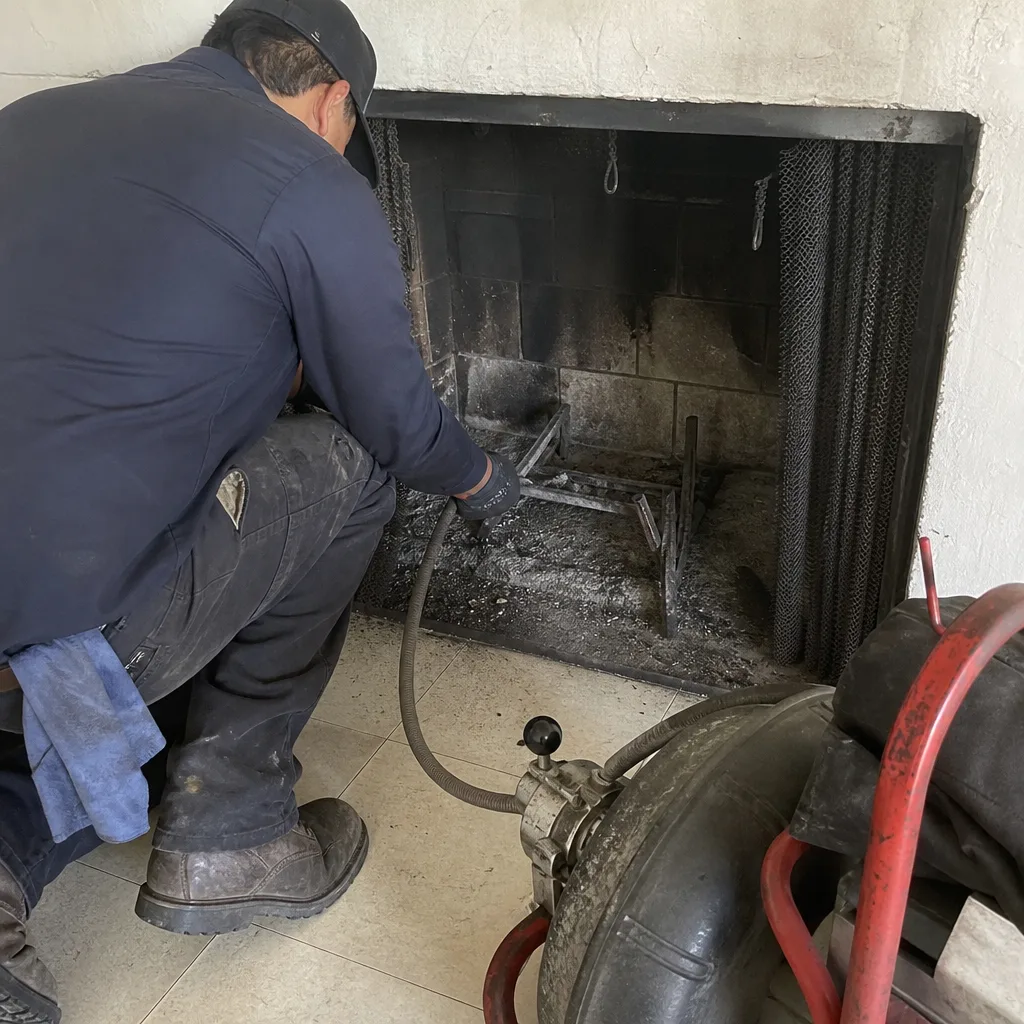
- Flue sweep from the firebox up using rotary rods or a manual brush matched to your liner type (clay tile, stainless, or masonry).
- Level 1 camera inspection of the flue interior, smoke shelf, and firebox mortar joints.
- Visual inspection of the chimney crown, cap, and flashing from the roofline.
- Damper test to confirm full open-close travel and seat tightness.
- Written condition report so you have documentation before the off-season.
If repairs show up on the camera, spring is also the right time to handle them. A hairline crack in a clay flue tile caught in April can be addressed with a HeatShield flue restoration before it widens. A rusting damper can be replaced while parts are on hand. By doing this work now, you avoid the September scramble when every supplier is back-ordered and every tech is in the field.
Summer: Cap, Crown, and Santa Ana Preparation (Not Temperature)
Summer in La Habra isn’t about heat – it’s about wind and UV. From late August through November, Santa Ana events push dry desert air through the canyons at 40 to 60 miles per hour with relative humidity dropping into single digits. That wind finds every loose cap, every cracked crown, every gap in flashing. A chimney cap that shifted during a March rain can become a projectile risk by September. A crown with a hairline crack widens with UV expansion across a summer of 90-degree afternoons and 60-degree nights. Temperature swing is the real enemy, not the heat itself.
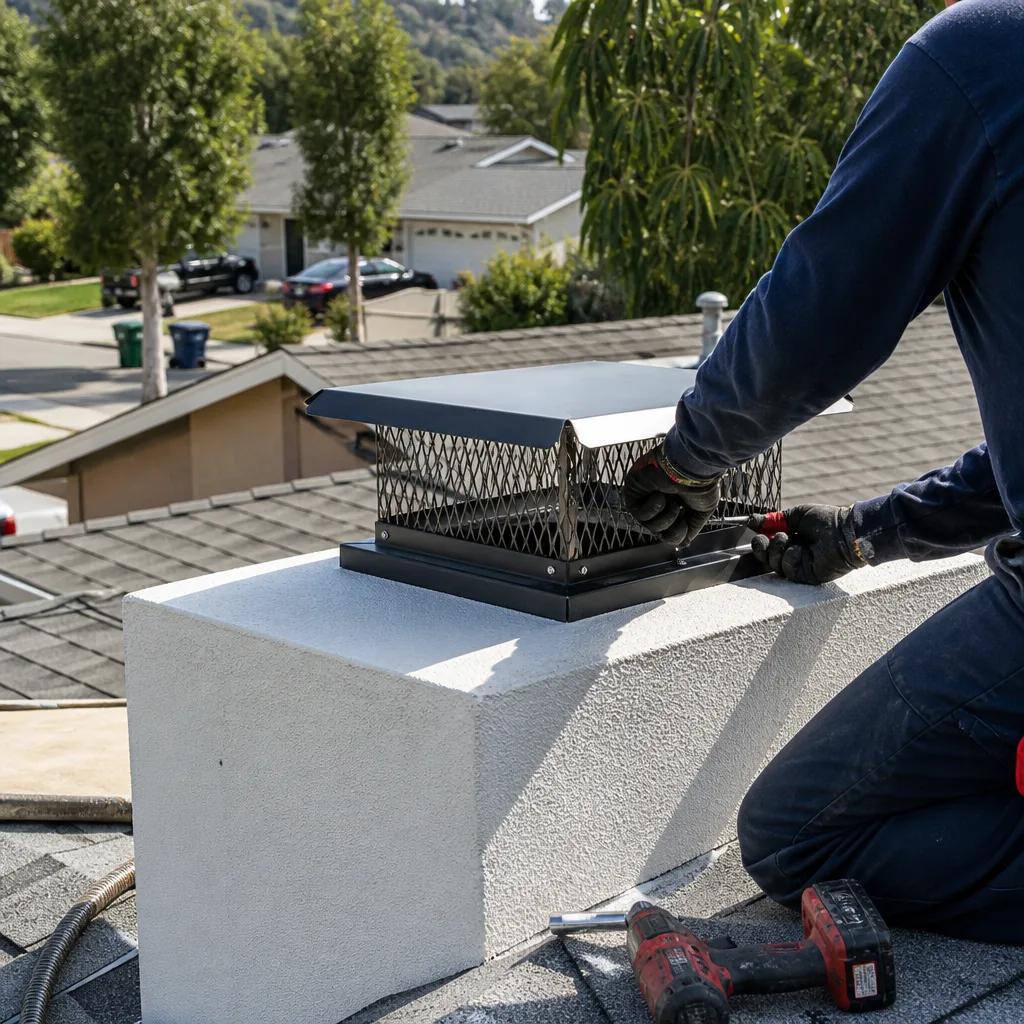
This is why we recommend a summer cap and crown check, ideally in July or early August. It’s a quick visit: we get on the roof, check that the cap is anchored, verify the spark arrestor mesh is intact, and look at the mortar crown for cracking or spalling. If the cap needs replacement, summer is when we want to do it. A Chimney Sweep La Habra home visit in August can have a new cap installed same week, not same month. Fall schedules don’t allow that.
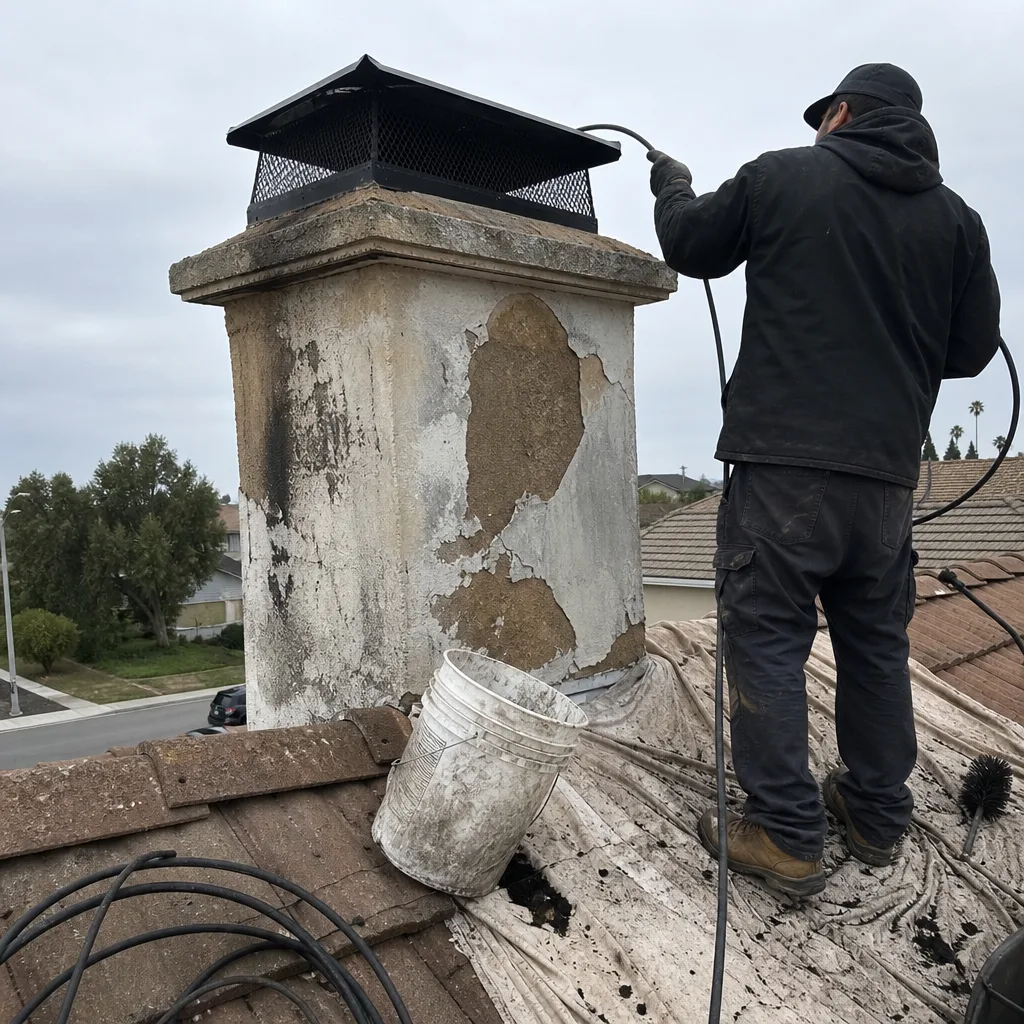
You can also do a ground-level visual check yourself. From the street or driveway, look for anything that seems different: a cap sitting off-center, missing mesh panels, a rust streak running down the chimney chase, visible mortar chips on the crown edge. Binoculars work better than squinting. If you see any of these, let a professional take a closer look. The repair is always cheaper before the Santa Ana finds the weakness.
One more summer-specific note: dryer vents get neglected in the heat. Dryer vent cleaning in South San Jose Hills and across our La Habra service area runs all summer, and it’s worth scheduling alongside a chimney cap check. A clogged dryer vent is a fire risk regardless of season, and summer is when lint piles up fastest from beach towels and frequent loads.
Fall: The Pre-Season Sweep and the October Ignition Window
If you skipped spring, fall becomes non-negotiable. And if you swept in spring and haven’t used the fireplace since, fall is still worth a light check. The specific risk in La Habra is the October spike: that first cool evening when everyone in the neighborhood lights their first fire of the season. Three things happen simultaneously. Unburned creosote from last season sits in flues. Spider webs and debris accumulate in caps and smoke shelves. And dampers seize from months of disuse. The combination produces smoke rollback into living rooms, inefficient burns, and in the worst cases, chimney fires from igniting accumulated creosote – exactly the scenario our Chimney Cleaning Emergency Preparedness Guide for La Habra Homes helps you avoid.
A fall pre-season visit focuses on three things:
- Sweep (if needed): If you had any fires since the last cleaning, even five or six, the flue has deposits. A quick sweep clears them before the season’s first hot fire.
- Damper seal check: A damper that doesn’t seat fully pulls conditioned air up the chimney all winter. We test travel, clean the pivot points, and confirm the seal.
- Cap and crown verification: After a summer of UV and the first Santa Ana events, the cap and crown need a quick re-check. We’re looking for anything the wind moved or the heat cracked.
October and November are also when we see the most chimney ignitions in La Habra. Not because the weather is dramatically cold, but because intermittent burners light a hot fire on a cold chair of creosote without a pre-season sweep. That’s the exact pattern that produces a rapid-burning creosote fire inside the flue. A mid-September sweep eliminates that risk for the entire burn window ahead.
Winter: Reading Combustion Signs in an Intermittent-Burn Household
La Habra winter fires are sporadic. You might light one on a cold December evening, then not again for three weeks. That intermittency hides problems. In a heavy-burn household, performance issues announce themselves quickly. In an intermittent-burn household, a partially blocked flue, a deteriorating liner, or wet firewood can linger for months before the homeowner notices the pattern.
During the winter burn season, watch for these specific signs:
- Smoke rollback: When you open the door or the fireplace is burning, smoke enters the room instead of drafting up. This is never acceptable and typically signals a flue restriction or downdraft.
- Lazy flame: A fire that burns with low, flickering, yellow-orange flames and generates a lot of smoke is either starving for air or burning wet wood. Dry, well-seasoned oak in a properly drafting fireplace produces a taller, more vigorous flame.
- Black soot on the glass or firebox walls: Some is normal, but a rapid buildup of black, puffy soot suggests incomplete combustion from wet wood or insufficient air.
- A chemical smell or strong odor after the fire dies: Creosote has a sharp, acrid smell. If you notice it when the fireplace is cold, deposits have likely built up enough to warrant a sweep.
Firewood is a La Habra-specific concern. Most local homeowners buy whatever’s easiest: grocery-store bundles, random oak from a friend, sometimes eucalyptus. Eucalyptus burns hot and fast but produces heavy oils that coat the flue quickly. Unseasoned wood (anything cut within the last six months) hisses, sizzles, and generates acidic moisture that eats at mortar joints. The fix is straightforward: buy wood with a moisture content under 20%, keep it stacked off the ground and covered, and avoid burning eucalyptus as a primary fuel. If you’ve already burned a season of questionable wood, schedule a winter sweep rather than waiting until spring.
Year-Round: How Olympia Chimney and Famco Components Hold Up to UV and Temperature Swings
La Habra gets 280-plus days of sun per year. The UV index regularly hits 8 or above from March through October. Roof-level temperatures on a summer afternoon exceed 140 degrees. At night, the roof drops into the 50s. That’s a 90-degree daily temperature swing at the chimney cap level, repeated hundreds of times per season. Hardware-store caps and generic rain covers don’t survive that for long. The powder coat fades, the fasteners galvanize, the mesh rusts through, and by year three the cap is a liability rather than a protection.
This is why we stock and install Olympia Chimney supply-grade caps and Famco venting components instead of off-the-shelf replacements. These are the same parts specified on new construction and major remodels, built with stainless steel bodies, welded seams, and mesh rated for ember control. In a climate with this much UV and this much temperature variation, material grade is the variable that determines whether a cap lasts four years or twelve. The cost difference is maybe $60 to $90 on a typical cap. Over a decade in La Habra sun, that’s trivial.
What does UV actually do to chimney components? Three things. It breaks down polymer seals and gaskets. It oxidizes galvanized coatings, exposing the base steel beneath. And it causes thermal expansion cycles that separate caulk joints and loosen mechanical fasteners. A cap that’s riveted rather than welded, made of thin-gauge galvanized steel rather than stainless, will show failure in the same places every time: at the screen edges, at the mounting collar, and at the spark arrestor mesh. Those are exactly the failure points that create ember risks during Santa Ana events and water entry during winter rains.
The same logic applies to liners. If you’re in a position where the flue needs a full structural reline, DuraFlex systems are built for exactly this: flexible stainless steel that expands and contracts with temperature swings without cracking, which rigid clay tile cannot do indefinitely. And for minor flue surface damage, HeatShield restoration can restore the interior surface without a full demo and reline. These are repair options most La Habra homeowners don’t know exist, because the typical sweep-and-go company doesn’t carry the materials or the training to offer them. Chimney sweeps in South San Jose Hills and across neighboring La Habra neighborhoods often refer this work out. We do it in-house.
What to Check Yourself (Without Getting on the Roof)
You don’t need to climb a ladder to monitor your chimney. A responsible homeowner in La Habra can catch most developing problems from the ground. Here’s a monthly checklist that takes five minutes:
- Look at the cap and crown from the street or driveway. Use binoculars. Check for rust streaks, off-center positioning, missing mesh, or visible cracks in the crown mortar.
- Shine a flashlight up the flue from inside the firebox. With the damper open, look for thick black buildup, flaking tile, or obstructions. If you see more than an eighth-inch of black crusty deposit, it’s time for a sweep.
- Check the damper travel. Open and close it fully. If it binds, squeaks, or doesn’t seat, it needs cleaning or replacement before the burn season.
- Look for water stains on the ceiling or walls near the chimney chase. Interior discoloration around the fireplace usually means water is entering somewhere: flashing, crown, or cap. Don’t wait on this one.
- Smell test. On a humid morning, stand near the firebox and take a breath. A strong smoky or acrid smell when the fireplace hasn’t been used is creosote off-gassing into the house. It’s time.
One caveat on DIY: if your chimney has a steep pitch, a second-story roofline, or a tile roof that’s fragile, leave the roof work to someone with proper equipment and insurance. The risk isn’t worth the inspection. Your ground-level checks will catch 90% of what a roof-level visit finds.
What Seasonal Chimney Care Costs in La Habra
Chimney service pricing in La Habra follows Orange County and Los Angeles market rates, with some local variation based on roof access and equipment requirements – see our Chimney Cleaning Cost Breakdown: The La Habra Homeowner’s Reference for 2026 for detailed numbers. Here’s what we currently see across the area for standard residential work:
| Service | Typical Range in La Habra | Notes |
|---|---|---|
| Standard chimney sweep (Level 1) | $180 – $260 | Includes flue brushing, firebox cleanout, and basic inspection |
| Sweep with camera inspection | $280 – $390 | Worth the add-on if the flue hasn’t been looked at in 5+ years |
| Cap replacement (supply-grade stainless) | $220 – $450 installed | Varies by flue size and roof access difficulty |
| Crown repair (minor crack sealing) | $180 – $350 | Major crown rebuilds run higher |
| Dryer vent cleaning | $130 – $200 | Often bundled with a chimney visit at a discount |
| Flue relining (DuraFlex system) | $2,500 – $5,500 | Structural job; only needed when the existing liner has failed |
In our experience, La Habra homeowners tend to under-spend on caps and crowns (because they can’t see them from the ground) and over-spend on emergency fall sweeps (because they called in October). Shifting your maintenance budget to spring and summer keeps the total cost down across a five-year window. And any honest sweep will tell you the same: a $260 spring cleaning prevents a $3,400 October reline. The camera inspection is always optional, but if you haven’t had one in years, it’s the highest-value money you can spend on your fireplace.
Common Mistakes to Avoid
- Following a national-brand fall-only sweep schedule. Those guides are written for cold-climate homes with heavy burn seasons. In La Habra, the spring sweep is the one that prevents hardened creosote glazing.
- Burning unseasoned or eucalyptus wood during winter months. Wet wood produces acidic smoke that degrades mortar, and eucalyptus oils coat the flue in a sticky film that’s harder to remove than standard creosote.
- Ignoring a damper that sticks or doesn’t seal. A leaky damper pulls conditioned air out of your house 365 days a year, not just during the burn season. The energy cost alone justifies the repair.
- Delaying a cap replacement because “it’s not urgent.” A missing or damaged cap is how you get roof leaks, bird nests, and ember escapes. In Santa Ana season, that becomes an active fire risk.
- Using the fireplace with visible smoke rollback. Smoke entering the living room is a ventilation failure, not a nuisance. It indicates a flue restriction, downdraft, or negative pressure problem that needs professional diagnosis.
- Assuming a newer house needs no chimney work. Houses built in La Habra after 1990 often have factory-built chimneys with sheet-metal components. They corrode, their caps come loose, and their systems need just as much monitoring as masonry fireplaces.
- Only checking the chimney when something smells bad. By the time you smell creosote inside the house, deposits have been building for months. Ground-level monthly checks catch problems before they reach the nose.
When to Call a Professional
Call a chimney professional if you see any of these: smoke rollback during a fire, visible flue cracks or flaking from inside the firebox, water staining near the chimney chase, a cap that’s missing or visibly damaged from the ground, or creosote buildup thicker than an eighth-inch. Also call after any event that could have compromised the system: a chimney fire, even a small one, an earthquake that rattled the masonry, or heavy rain that exposed a new interior leak. Chimney Sweep La Habra offers free estimates in La Habra – call (866) 747-8330 and we’ll send someone to look at your system, run a camera inspection where the situation calls for it, and tell you plainly what needs attention now and what can safely wait.
Frequently Asked Questions
Once a year is the safe minimum, even with light use. In La Habra’s climate, the ideal timing is March through May, after the burn season ends and before summer humidity bakes deposits into a glaze. If you burn more than 20 fires per winter, or burn eucalyptus or unseasoned wood, you may need a second sweep mid-season. Call (866) 747-8330 and we’ll assess your specific usage pattern and set a schedule that matches it.
Yes. Light usage produces less creosote volume per fire than heavy usage, but the deposits that do form sit untouched for longer periods, absorb marine-layer moisture, and harden. In our experience in La Habra, intermittent-burn chimneys often have more stubborn glaze than heavy-use chimneys because nothing gets burned off. A camera inspection tells you exactly what’s in there before you commit to a sweep.
A standard sweep in La Habra runs $180 to $260, and a sweep with camera inspection runs $280 to $390. Prices vary based on roof access, flue type, and the condition of the system. We quote flat pricing before the appointment, so you know the cost going in. Free estimates are available by calling (866) 747-8330.
Creosote accumulates, hardens into a glaze, and eventually becomes a fuel source inside the flue. The crown and cap degrade under La Habra’s UV exposure, allowing water into the masonry, which accelerates flue tile cracking and mortar erosion. The repair cost escalates from a few hundred dollars for a sweep to several thousand for a reline. The damage is almost always preventable with annual inspection.
In many cases, yes. HeatShield is a resurfacing system that restores deteriorated flue surfaces without removing the existing liner. It works on clay tile and masonry flues with surface cracking, spalling, or joint gaps, provided the structural integrity is still sound. A camera inspection determines whether your flue qualifies. Chimney Sweep La Habra is HeatShield-equipped and can complete this restoration in-house.
Generally no, and not because of your chimney alone. High winds create negative pressure at the chimney top, which can pull smoke and embers back down the flue or out of the firebox. A cap with a properly maintained spark arrestor reduces ember escape, but the downdraft issue remains. We recommend holding off on fires during high-wind advisories and having your cap and arrestor checked before Santa Ana season.
The Bottom Line
La Habra’s chimney maintenance calendar runs on marine layer, Santa Ana season, and sporadic burn windows. The annual sweep belongs in spring, not fall. The cap and crown inspection belongs in summer, ahead of the winds. The pre-season damper check belongs in September, before the October ignition window. And the winter burn season is when you monitor combustion quality, not when you discover last year’s problems. If you do the spring sweep and the summer crown check consistently, the rest of the year takes care of itself. If you haven’t had your chimney looked at in the last twelve months, the next step is straightforward: explore our more guides & resources, then call (866) 747-8330 and schedule a sweep and inspection for your La Habra home. We’ll show you what’s in the flue, what the camera sees, and what your system needs before the next burn window arrives.
Written by the team at Chimney Sweep La Habra, serving La Habra since 2014.
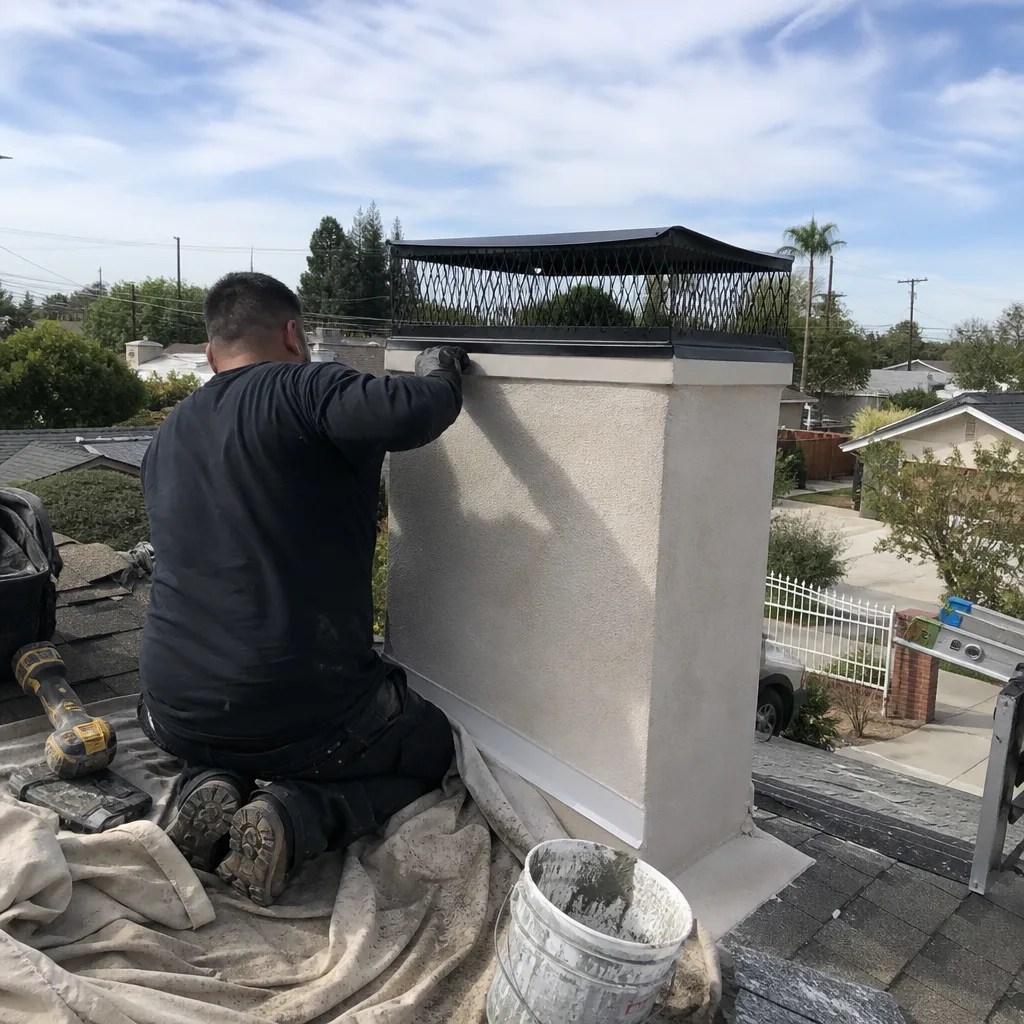
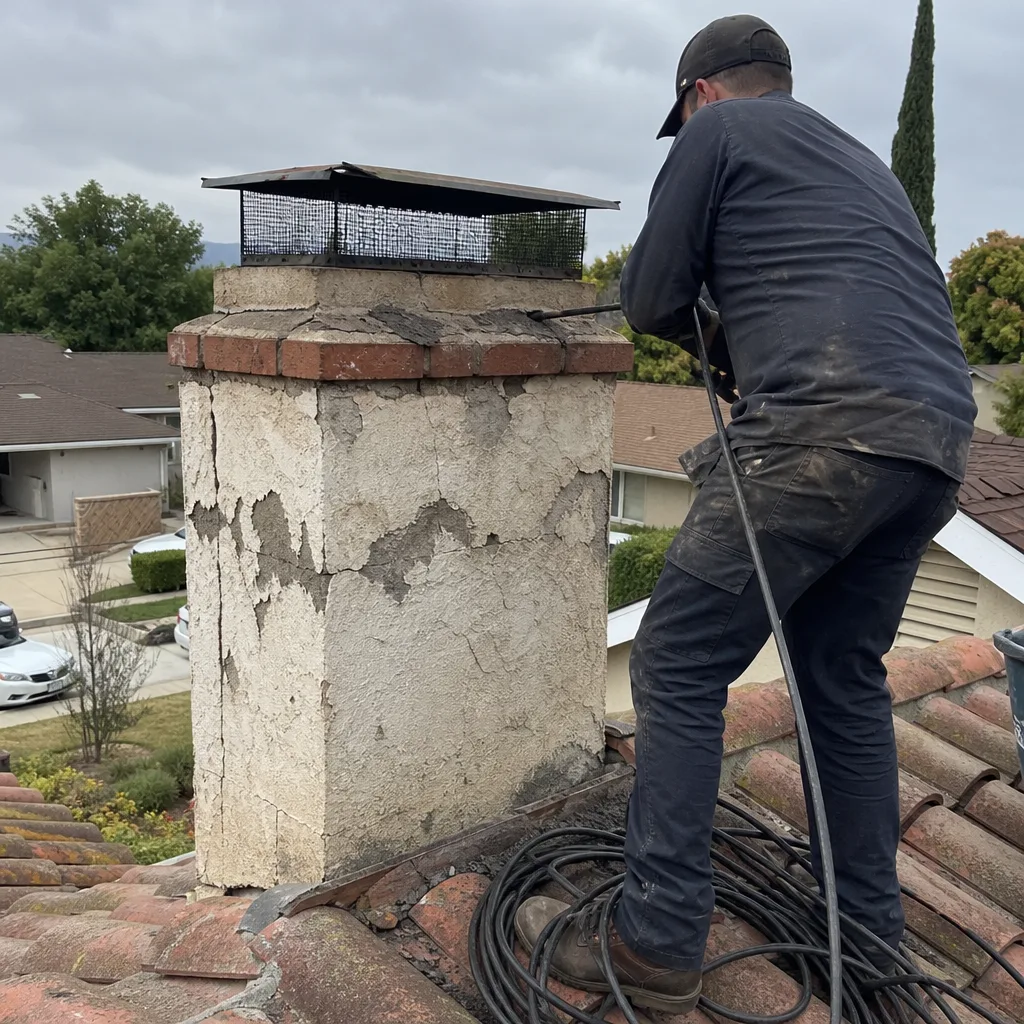
See the difference
 Before
 After
 Before
 After
 Before
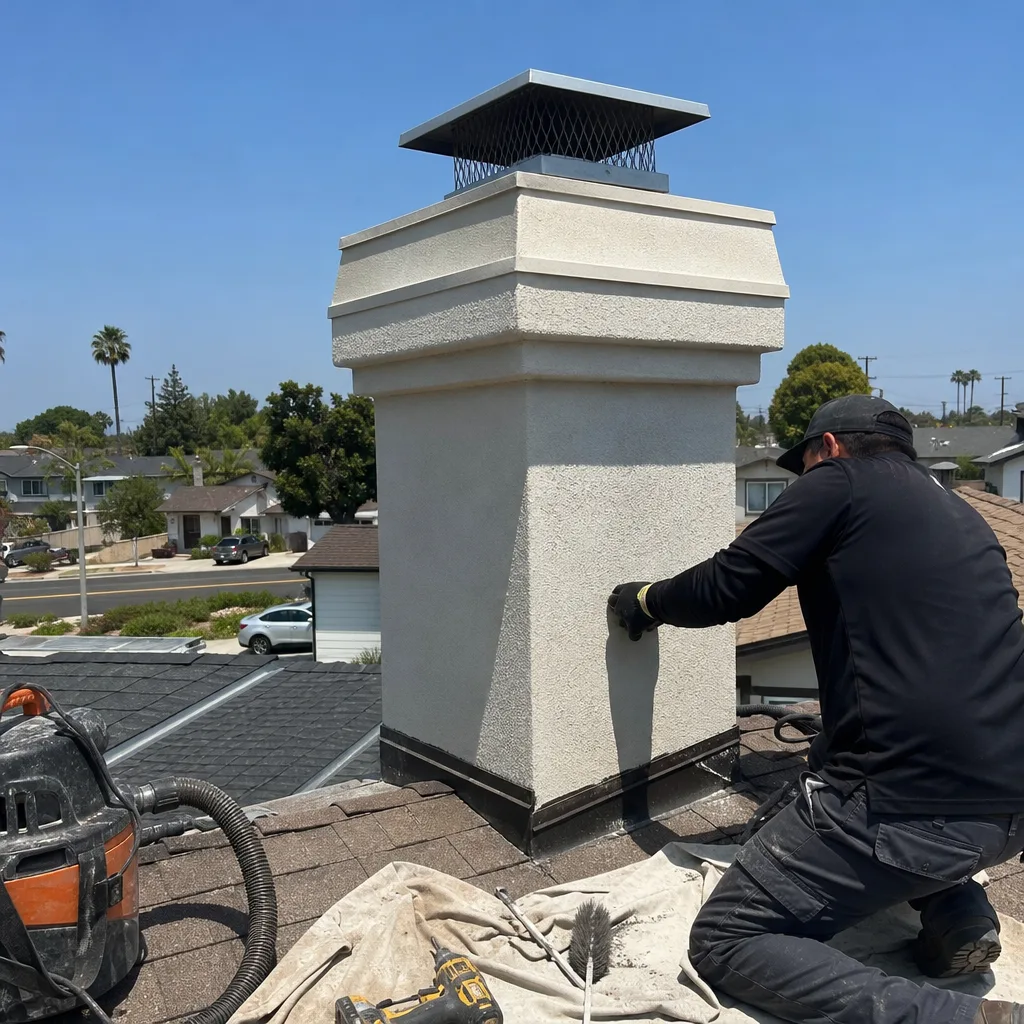 After