
Last updated November 2, 2026
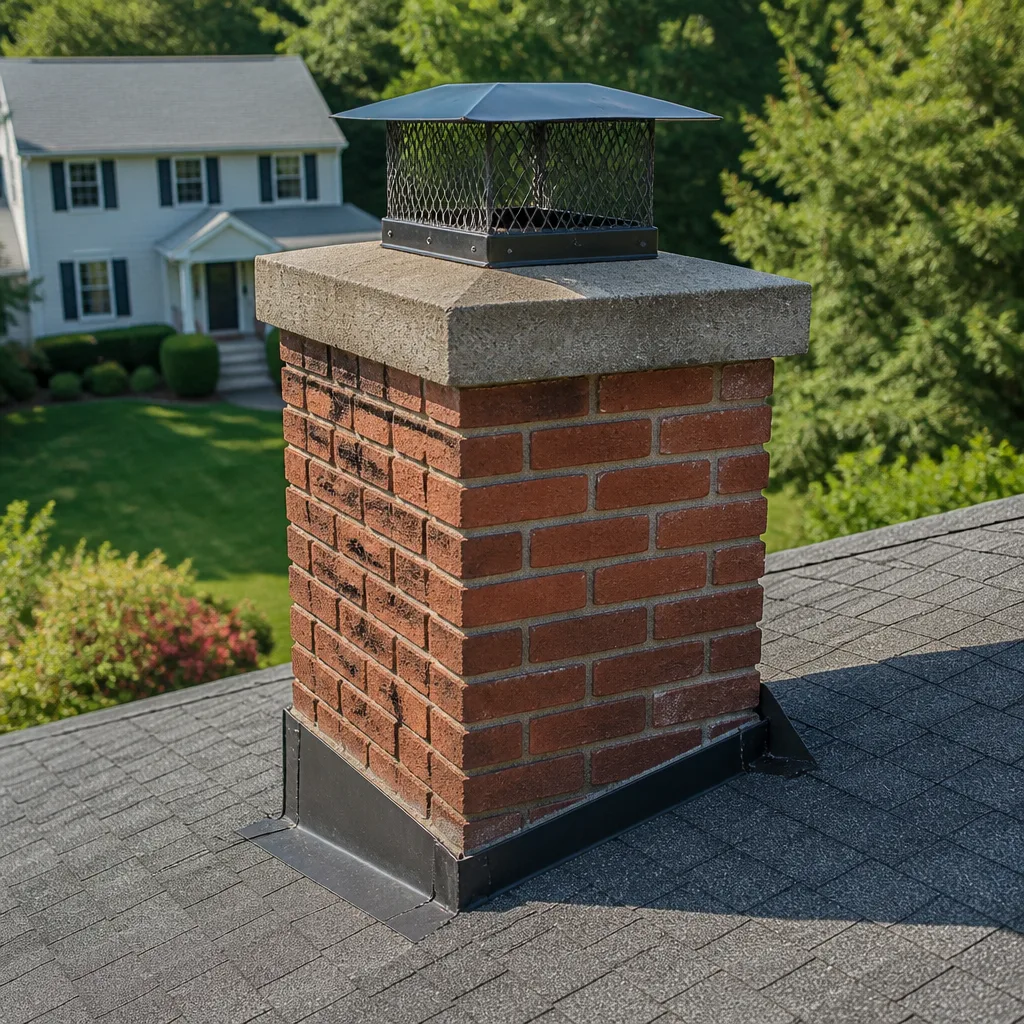 Sweep & inspection
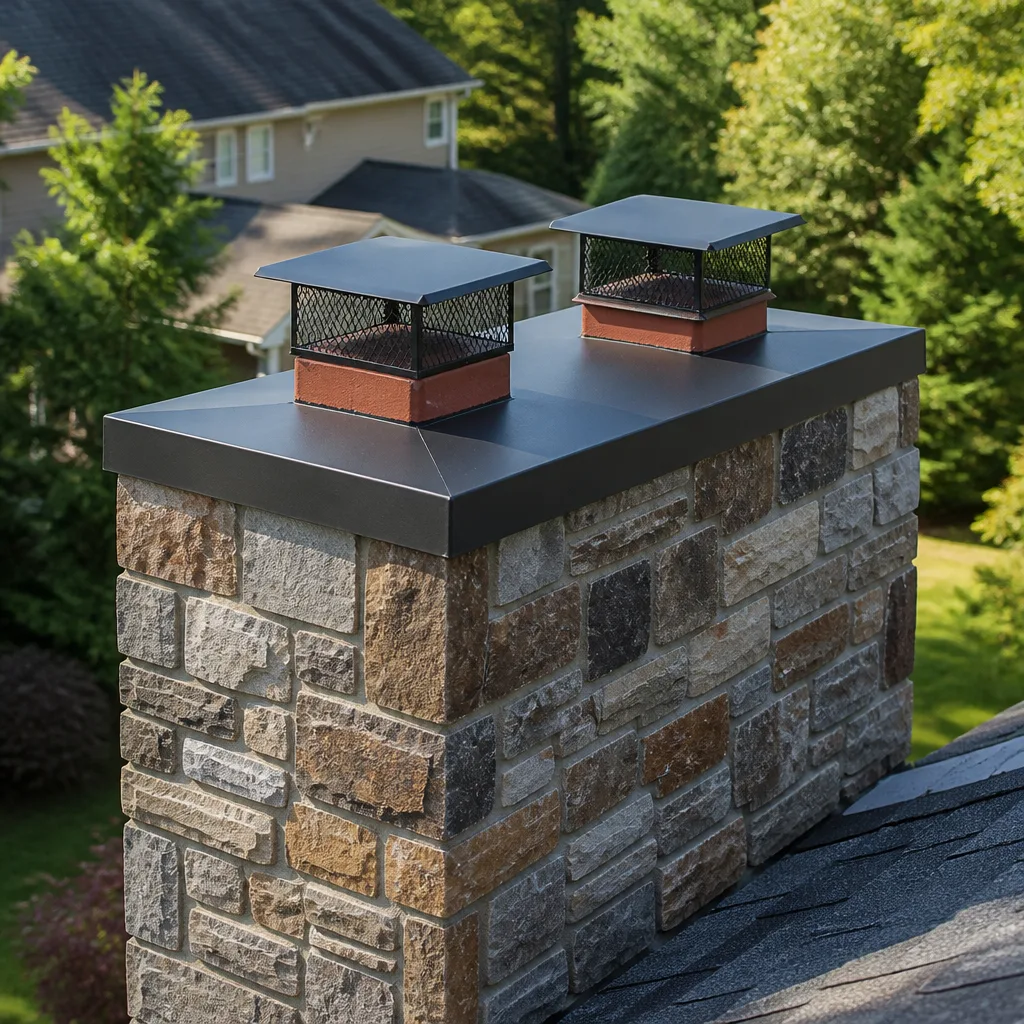 Caps & crowns
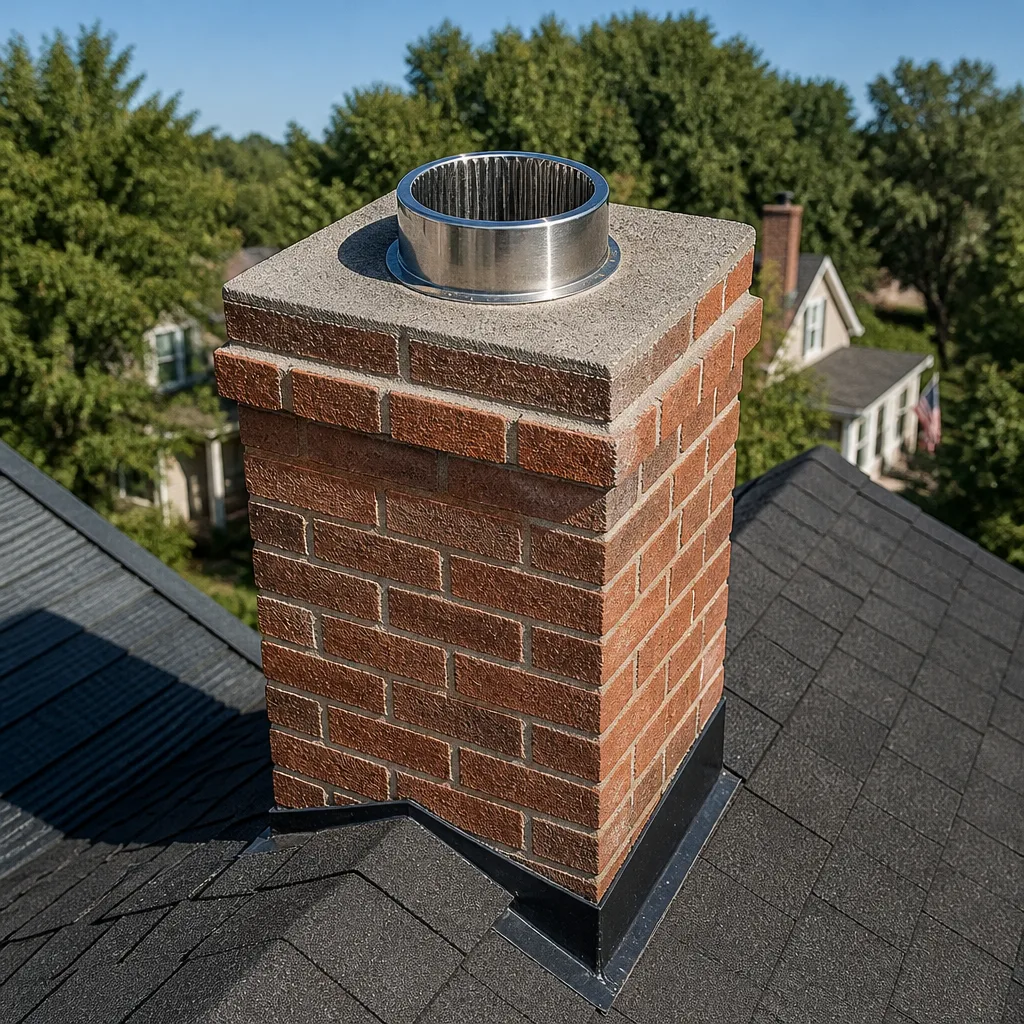 Flue relining
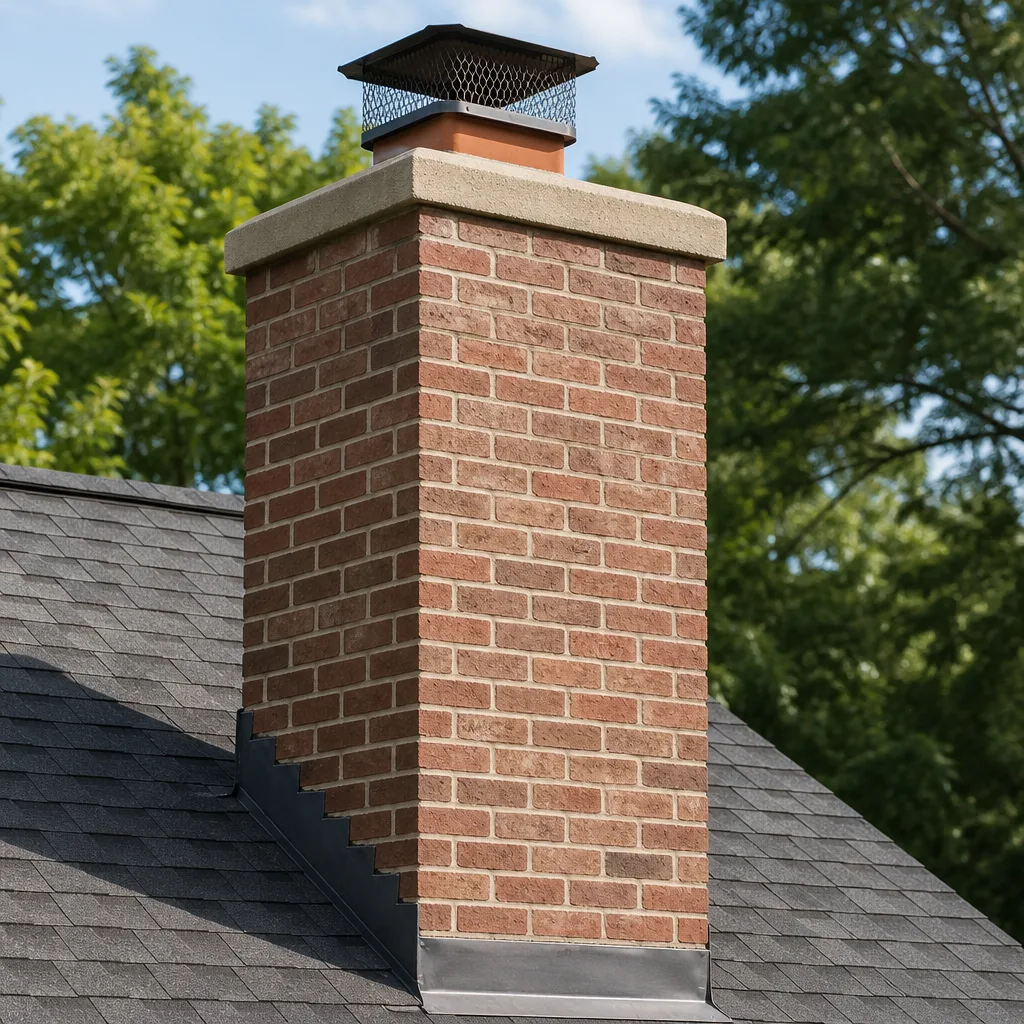 Masonry repair
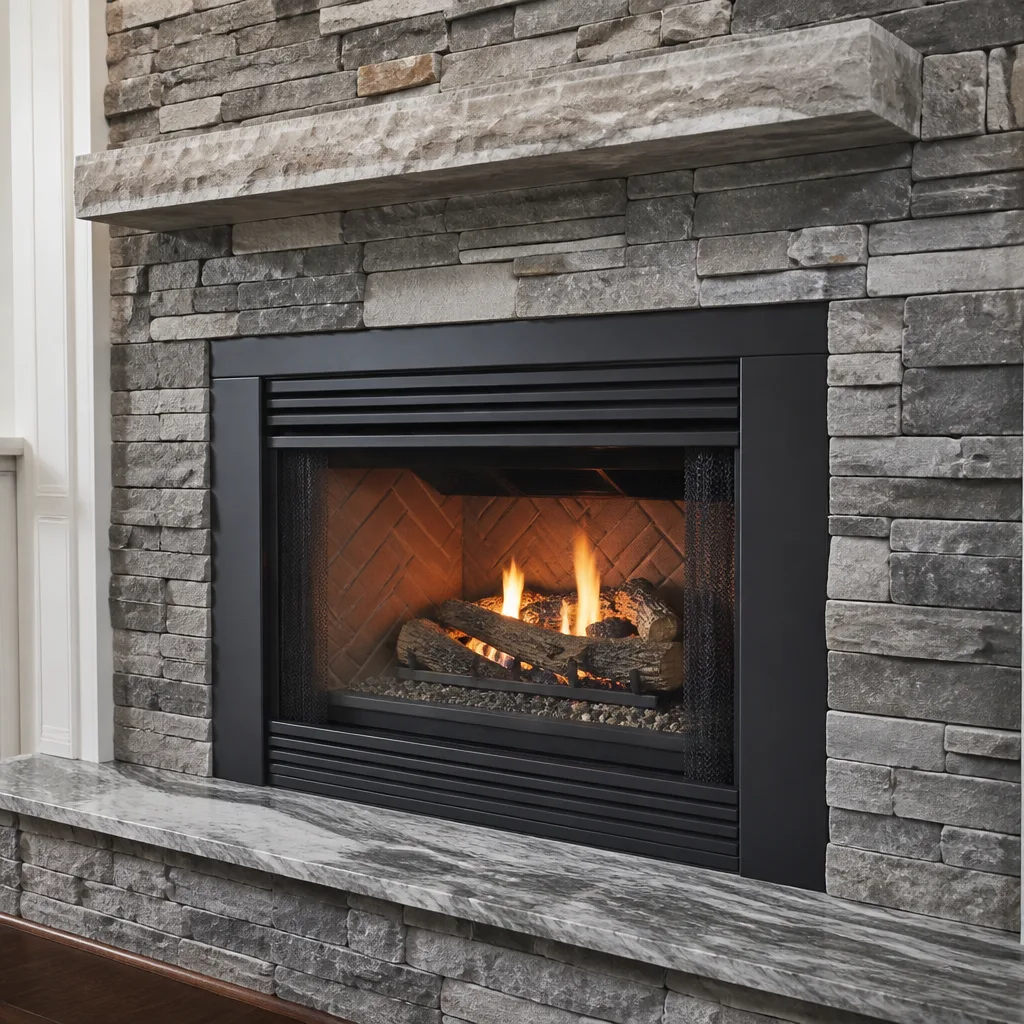 Gas fireplace service
Level 1 sweep and inspection to the NFPA 211 annual standard - flue, crown, cap, and flashing checked and photographed
Chimney sweep logs do not sweep chimneys. They loosen some creosote - which then falls where a brush and vacuum still have to collect it.
Chimney Cleaning Warning Signs: A La Habra Homeowner’s Reference Guide
Most homeowners in La Habra never notice the first three or four warnings their chimney sends. A faint odor after rain. A wisp of smoke that hangs in the room for an hour. A few spalled brick faces in the flower bed. Each one is easy to explain away, and each one points to a distinct mechanical or structural problem that is quietly compounding. This guide names every significant chimney cleaning warning sign, explains what is actually happening inside the flue or masonry, and assigns a real urgency level so you know whether you are looking at a weekend project or a fire risk that needs a call before the next burn. For Chimney Sweep Maintenance Checklist for La Habra Homeowners, see our companion resource.
Quick Answer
Chimney cleaning warning signs in La Habra include smoke rolling back into the room, a persistent campfire-like odor that intensifies on humid days, visible dark brown or black glaze on the damper, white efflorescence or crumbling brick on the exterior, and rust on the cap or rain pan. Most of these symptoms indicate creosote buildup, water intrusion, or draft failure, and any one of them warrants a professional camera inspection before the next fire.
Styles & brands we work with
- Sweep & inspection
- Caps & crowns
- Flue relining
- Masonry repair
- Gas fireplace service
Table of Contents
- Smoke Rolling Back: What It Actually Means
- The Odor You Cannot Unscent: Creosote Smell in Every Season
- First, Second, and Third-Degree Creosote: A Practical Guide
- Exterior Brick and Crown Damage: What the Masonry Is Telling You
- What to Look for Inside the Firebox Before You Call
- Rust, Damper Failure, and Hardware That Gives Up Quietly
- La Habra’s Hidden Culprit: Negative Pressure in Tighter Homes
- How to Photograph and Document the Warning Signs
- Common Mistakes to Avoid
- When to Call a Professional
- Frequently Asked Questions
Smoke Rolling Back: What It Actually Means
When smoke drifts into the living room instead of up the flue, most people assume the damper is closed. Sometimes that is exactly right, and opening it solves the problem. But when the damper is wide open and smoke still rolls back, you are looking at one of four mechanical issues, and none of them is a good sign for a chimney that has not been swept in a while. Our Chimney Sweep Troubleshooting: Common Problems and How to Fix Them covers each in detail.
The most common cause we see in La Habra homes built before 1990 is a flue that has narrowed from creosote accumulation. A nine-by-thirteen-inch flue with three seasons of wood-burning buildup can effectively become a six-inch passage, and the smoke has nowhere to go but backward. The physics is simple: the chimney cannot move the volume of air the fire produces, so the path of least resistance becomes the room.
A second cause is a partially failed damper. Dampers rust, warp, and seize. A damper that will not open fully, or one with a broken plate that flutters and chokes the draft, mimics the symptoms of a clogged flue. The third cause is liner damage, where cracked or spalled flue tiles create turbulence and dead spots that stall the draft. The fourth, and a growing issue in La Habra, is negative pressure, which deserves its own section below.
How to Stop Smoke Backing Into the House
- Open the damper fully and confirm the flue is not obstructed by looking up with a flashlight. Do not rely on memory.
- Check whether a window or bathroom exhaust fan is running during the fire. Turn it off and see whether the smoke reverses.
- If smoke persists with the damper open and no exhaust running, stop burning. The next burn risks a chimney fire or carbon monoxide backdraft.
- Call for a camera inspection. The only way to distinguish creosote narrowing from liner damage is to see the flue from the inside.
Smoke rollout is not a subtle clue. It is the chimney announcing that the venting system has failed. Treat it like a mechanical breakdown, not a weather issue.
The Odor You Cannot Unscent: Creosote Smell in Every Season
A working chimney should be odorless when the fire is out. If you smell a strong campfire, barbecue, or burned-wood smell on days when no fire has burned for months, particularly during La Habra’s warm late-summer stretches when the air is still, that smell is creosote inside the flue. More accurately, it is the volatile organic compounds in the creosote being mobilized by humidity and pressure differences between the inside of the house and the outside air.
Some homeowners describe it as musty or smoky. Others say it smells like a damp ashtray. In either case, the smell intensifies on humid mornings and whenever the air conditioner runs continuously, because the indoor air is being pushed out through any available gap, including the chimney. That moving air carries creosote smell backward into the living space.
This odor is a form of chemical evidence. The stronger and more persistent the smell, the thicker and more mature the creosote layer. A season of occasional weekend fires can leave a light, flaky first-degree creosote that produces at most a faint smell on rainy days. A heavier, tar-like second-degree creosote announces itself every time the house pressure changes. A third-degree glazed layer, the kind that looks like black porcelain and can fuel a chimney fire, can make an entire room smell like a cold campfire even with the damper shut.
There is a second smell homeowners often attribute to creosote but should not: a damp, mineral, basement-like smell that comes from water pooling at the bottom of the flue. Water that has been sitting on top of wet ash and decomposed leaves produces its own distinct odor. If you smell something closer to wet dirt than smoke, water entry is likely the primary issue, and the chimney needs both cleaning and a water-intrusion inspection.
What to Do When You Smell Creosote
- Open the damper briefly on a dry afternoon, then close it again. If the odor does not change, the creosote layer is substantial.
- Run the air conditioner for an hour with the damper closed. If the smell returns, negative pressure is drawing flue air into the home, which means the flue needs attention.
- Do not mask the smell with air fresheners. That treats the symptom and leaves the cause untouched for another season.
- Book a cleaning before the next fire. A sweep removes the creosote that is producing the odor, and a camera inspection explains why it built up as quickly as it did.
The Chimney Sweep La Habra home resource page includes more on how a professional sweep removes creosote and tests the draft, if you want the background before you call.
First, Second, and Third-Degree Creosote: A Practical Guide
Creosote is not one substance. It is a family of deposits that forms when wood smoke condenses on the cooler walls of a flue, and the difference between the three recognized stages matters because it dictates what kind of cleaning or repair the chimney actually needs. A homeowner who understands this is substantially harder to upsell, which is useful when you are talking to any service provider.
First-Degree: The Flaky Layer
First-degree creosote looks like dry, dark flakes or soot. It brushes off easily during a standard sweep. It forms when fires burn hot and the flue stays warm enough for most of the smoke to exit without condensing. This is a normal byproduct of wood burning. It becomes a problem only when it is allowed to thicken season after season, because layers of soot reduce flue diameter and can catch embers and hold them against the flue wall. Annual cleaning handles first-degree creosote with no drama.
Second-Degree: The Tar Layer
Second-degree creosote is glossy, dark brown to black, and harder than a typical brush can fully remove in one pass. It forms when fires burn cooler or when the flue runs cold, often because the chimney is under-sized, the fire is too small, or the wood is not seasoned. Second-degree layers are combustible and can burn intensely if ignited. Most importantly, second-degree creosote means the firebox and flue conditions are producing a deposit that a simple brushing will not entirely eliminate, and the professional may need rotary tools or chemical treatment to break it down.
Third-Degree: The Glaze
Third-degree creosote is the stage homeowners should worry about. It looks like shiny black glass or baked enamel, and it forms when second-degree creosote bakes repeatedly until it hardens into a dense, fuel-rich layer. A brush will skip over it. A standard cleaning cannot remove it. Third-degree creosote is not just a fire risk; it changes the flue surface so drastically that even after deposit removal, the underlying liner may need restoration. This is where HeatShield flue restoration becomes relevant: the product is designed for exactly the kind of flue repair that follows a severe creosote event. In our experience, La Habra homes where a fireplace has been used heavily for a decade without cleaning are the ones that come back with third-degree deposits, and those flues usually need more than a sweep.
If you are not sure which stage you are looking at, do not attempt to remove it yourself. A camera inspection distinguishes the stages definitively, and the wrong cleaning method on third-degree creosote can fold the deposit or scratch the liner without actually solving the problem.
For homeowners in the nearby hills, our Chimney Sweep in South San Jose Hills page covers how the same creosote stages present in that area’s slightly different housing stock.
Exterior Brick and Crown Damage: What the Masonry Is Telling You
Water is the enemy of every chimney in La Habra. The city sits far enough inland to avoid the coastal marine layer’s constant dampness, but close enough to the Pacific for occasional heavy rain bands, and the temperature swings between hot dry summers and cool wet winters are rough on mortar. Brick, mortar, and concrete expand and contract at different rates, and over twenty or thirty years, the joints quietly open up.
The warning signs on the exterior are not decorative imperfections. They are structural diary entries.
Efflorescence: The White Stain
A white, chalky residue on the brick or mortar is efflorescence, and it is water-soluble salts being carried to the surface by moisture moving through the masonry. The stain is not the problem. The moisture behind it is. Efflorescence proves that water is getting into the brick and traveling through it, which means it is also traveling toward the flue liner and the interior structure of the chimney. In La Habra’s older ranch and Spanish-style homes, we see efflorescence most often on chimneys that share a wall with a bathroom or on exterior-facing flues that catch full afternoon sun and then cool rapidly at night.
Spalling Brick
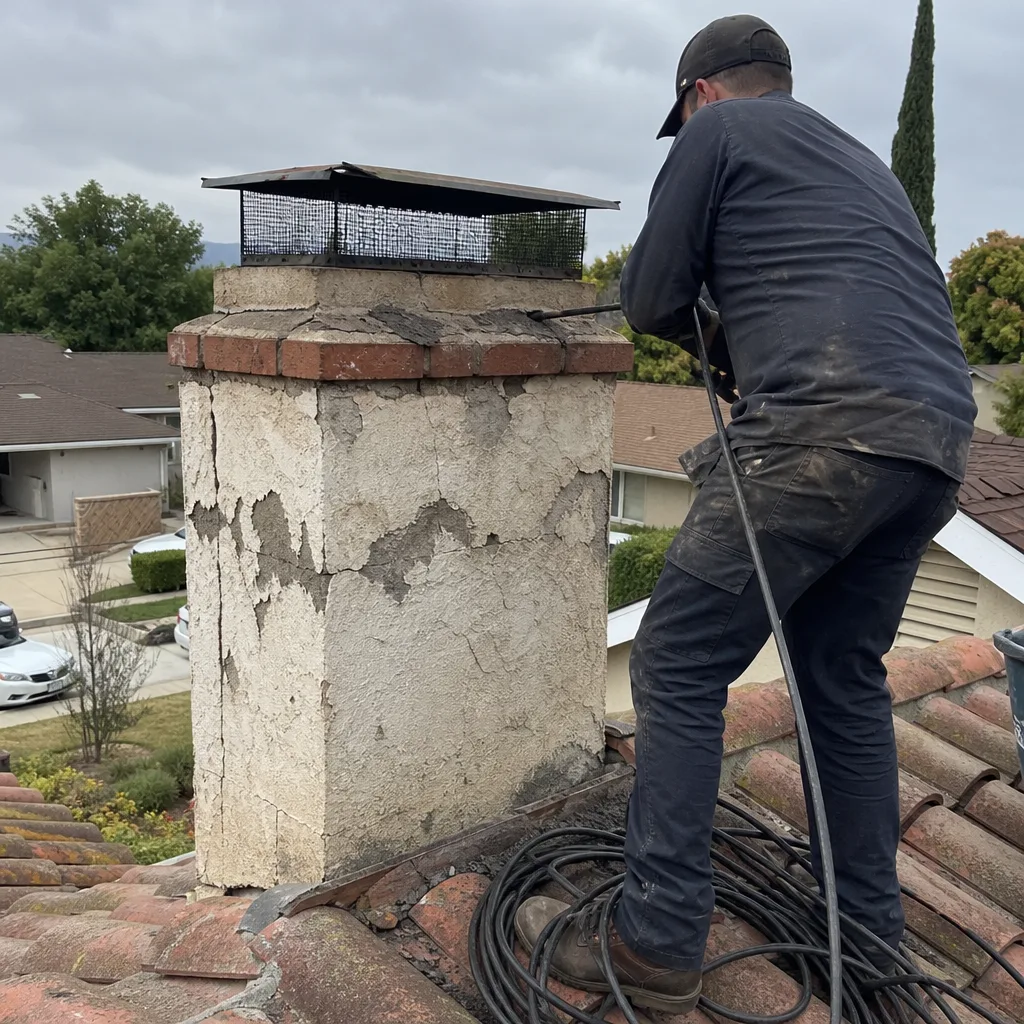
Spalling is the flaking or popping off of the brick face. You might find chunks of brick in the flower bed or on the patio, or notice crescent-shaped depressions where the brick surface used to be. Spalling is water that has penetrated the brick, expanded, and broken the clay from the inside. Once a brick has spalled, it cannot be repaired; it must be replaced, and the water source must be found or the replacement bricks will fail the same way. A row of spalled bricks near the top of the chimney is an especially urgent sign, because the upper courses support the crown and cap.
Crown Cracking
The chimney crown is the concrete slab that caps the masonry. It is supposed to shed water away from the flue. When the crown cracks, water runs into the crack, sits against the brick, and begins the slow process of spalling whatever it touches. Hairline cracks are common in La Habra’s climate. Cracks wider than a quarter inch, or cracks that show evidence of water staining, are active damage paths that need sealing or crown replacement. A cracked crown also accelerates creosote odor problems, because water entering the chimney pools at the bottom of the flue and mixes with old ash to produce that damp, mineral smell.
Rusted or Missing Cap
The chimney cap is a metal part, and metal parts fail on a schedule. A galvanized cap in La Habra weather can start rusting within five to seven years, and once rust starts, water and small animals both get through. Rust on the cap, rust streaks down the brick below the cap, or a cap that is visibly askew are all signs that the top of the chimney has been open to weather. We source replacement caps and other venting components from Olympia Chimney and Copperfield, which means the replacement is not a hardware-store universal fit but a proper matched component sized to the flue. See Choosing the Right Chimney Cleaning Brand: A Buyer’s Guide for La Habra for help selecting quality components.
What to Look for Inside the Firebox Before You Call
The firebox is the part of the chimney most homeowners actually see, and it is where several early warnings appear long before the flue itself becomes visibly problematic. If you open the glass doors or move the screen aside and look carefully, the firebox will tell you more about the chimney’s condition than the roof ever will.
White or Black Glazing on the Damper
Run a finger along the damper plate or the metal frame. A sticky, tar-like black residue is creosote that condensed on the cool metal and never made it up the flue. A white, crystallized coating is creosote that has interacted with moisture and broken down. Both are signs that the flue is not drafting efficiently, because the damper area should be the point where smoke accelerates, not where it lingers. A heavy coating on the damper predicts a much heavier coating in the flue itself.
Smoke Staining Above the Lintel
The lintel is the metal bar that spans the top of the fireplace opening. Look at the brick or stone above it. A dark stain that is widest at the center of the lintel and fades toward the edges is a sign of persistent smoke rollout. Somewhere in the chimney’s history, fires were burning with the damper partially closed, or the flue was struggling to move smoke, and the smoke chose to leave through the front of the fireplace. A light stain from an old one-time mistake is not alarming. A stain that is dark, wide, and growing means the current operation of the fireplace is consistent with draft failure.
Cracked or Deteriorated Firebrick
Firebrick lines the floor and walls of the firebox to protect the surrounding masonry from direct flame heat. Hairline cracks are normal and harmless. What is not normal is a brick that has broken, a thinned floor brick that shows gouges or missing corners, or a back wall that has begun to bow outward. Firebrick replacement is routine for a professional, but missing firebrick is not just cosmetic. If flame can reach the masonry behind the firebox liner, the chimney is being heated in a way it was not designed for, and the masonry will degrade from the inside out.
We tell La Habra homeowners to photograph the firebox with a phone flashlight before calling anyone. The photo gives the technician a baseline, and it helps you communicate what you are seeing without trying to remember details during the call. If the fireplace is also burning poorly in cold weather, the Chimney Repair in South San Jose Hills page explains how these same symptoms are diagnosed across different home styles.
Rust, Damper Failure, and Hardware That Gives Up Quietly
Chimney hardware fails slowly, and it usually fails in silence. The first sign of a dying damper is not a dramatic snap; it is a handle that turns more easily than it should, or a plate that no longer stays where you put it. The first sign of a rotting cap is not a hole in the roof; it is a round rust stain on the crown or a faint metallic odor after rain.
Dampers in La Habra homes are commonly throat dampers, the cast-iron plate that sits just above the firebox, and they live in one of the worst environments a metal part can face: high heat from below, moisture from above, and decades of expansion-and-contraction cycles. When a damper’s frame warps or the hinge rusts through, the plate can no longer form a seal. A failed damper means the chimney is an open pipe to the outside when the fire is not burning, which wastes conditioned air in summer and cold air in winter, and it means creosote odor has a direct path into the house at all times.
A worn or missing cap is equally quiet. We see caps in La Habra that have lost their side mesh to rust, leaving the flue wide open to birds, squirrels, and rooftop debris. We see caps that are still in place but whose rain pans have rusted through, so rainwater runs directly down the flue and pools on the smoke shelf. Neither one makes noise. Both are visible with a pair of binoculars from the ground or a quick look from the roof.
The professional recommendation when hardware has failed is to replace it with hardware that fits the specific flue and damper dimensions, and this is where the difference between professional supply lines and hardware-store shelf stock becomes practical. We keep Famco and Olympia Chimney components in our inventory for standard sizes, which means a failed cap or damper gets replaced with a component built for chimney service work, not a generic sheet-metal approximation.
La Habra’s Hidden Culprit: Negative Pressure in Tighter Homes
This is the warning sign that confuses the most homeowners, because the chimney can be perfectly clean, the damper can be wide open, and smoke still rolls back into the room. In a house that is tightly sealed, the fire itself creates the problem.
When a fire burns, it pulls air from the room at roughly two hundred to four hundred cubic feet per minute. If the house cannot replace that air, the pressure inside drops below the pressure outside. The chimney, which is supposed to be the exhaust, becomes the intake, and air starts flowing down the flue to balance the pressure. The result is smoke that hovers in the firebox, spills into the room, and then often backdrafts carbon monoxide.
La Habra’s housing stock plays a role here. Many homes built in the 1950s and 1960s used to be naturally leaky, which helped the fireplace breathe. The same homes, after years of new windows, weatherstripping, door replacements, and attic insulation, are now much tighter, and the fireplace that worked well in 1965 struggles to operate in 2026 because the house no longer leaks enough air to feed it. Kitchens with powerful range hoods and bathrooms with high-volume exhaust fans make the problem worse, because they pull additional air out of the room while the fire is trying to draw air in.
The fix is not always inside the chimney. Some homes need a make-up air source, like a window cracked during burns or a dedicated fresh-air intake. Some need the damper opened earlier so the flue warms before the fire is lit. Others need the chimney itself evaluated for liner capacity, because a flue that was marginal when the house was leaky may be inadequate now that the house is sealed. If you suspect negative pressure, mention it when you call, because it changes how the technician approaches the draft test.
How to Photograph and Document the Warning Signs
A homeowner who can photograph and describe what they are seeing will get a much better diagnosis over the phone, and the technician will arrive with a clearer picture of the problem. Browse our more guides & resources for additional homeowner tips. Here is the process we recommend for La Habra homeowners.
- Photograph the firebox from a kneeling position. Use a phone flashlight, angle the light along the wall rather than straight at it, and take one photo of the damper, one of the lintel area, and one of the back firebrick wall.
- Photograph the exterior from the roof or with a long lens from the yard. Include the full height of the chimney in the frame, then move closer for the crown, cap, and top three brick courses. The most useful shots show rust, cracking, or efflorescence with context so the technician can locate it.
- Take a photo of the flue opening from above if safe to do so. Do not lean over the flue or walk on a steep roof. A photo taken from a stable ladder at the roofline is enough to show cap condition.
- Note the dates and conditions of any smoke or odor events. “Smelled smoke on July 12, 9 p.m., AC on, no fire” is far more useful than “sometimes smells musty.” The pattern reveals whether the issue is pressure-driven, moisture-driven, or creosote-driven.
- Send or have ready the photos when you call for an estimate. A technician who sees the crown crack and the glaze on the damper before arriving will bring the right tools, which shortens the visit and the diagnosis.
Documentation also protects you. If a second opinion is ever needed, the photos establish what the chimney looked like on the day you first noticed the problem.
Common Mistakes to Avoid
- Burning a chimney-sweep cleaning log and calling it done. Cleaning logs can loosen some first-degree creosote, but they cannot remove second- or third-degree deposits, and they do not solve structural or water-intrusion issues. In La Habra’s older homes, they give a false sense of safety.
- Painting over efflorescence. Paint traps the moisture inside the masonry and accelerates spalling. The white stain is a signal; covering it does not stop the water.
- Assuming a new damper fixes smoke rollout. If the flue is narrowed by creosote or the liner is cracked, a perfect damper will not restore the draft. The flue itself must be evaluated first.
- Waiting for the “perfect” time to schedule a cleaning. In La Habra, late summer and early fall are the busiest times for chimney service, and the wait time grows the closer you get to burning season. Spring is the best season for cleaning and the easiest to book.
- Ignoring rust on the cap because the fireplace “still works.” A fireplace will keep working while the cap is failing, and water will continue entering the flue until the liner or the firebox develops a problem big enough to see. The rust is the early warning, not the late warning.
- Skipping the camera inspection to save money. A sweep without a camera inspection removes some creosote but tells you nothing about the liner’s condition. The camera is what distinguishes a clean chimney from a safe one.
When to Call a Professional
Call a professional when smoke rolls back into the room with the damper open, when the creosote odor persists on days with no fire, when you find spalled brick or see crown cracking, or when the damper is visibly rusted or stuck. These are mechanical and structural failures, and the longer they wait, the more invasive the eventual repair.
Chimney Sweep La Habra offers free estimates in La Habra, and we bring a camera, the right-size brushes, and the professional-grade materials to handle what we find. If your dryer vent has not been cleaned in years, that is part of the same ventilation safety picture; our Dryer Vent Cleaning in South San Jose Hills page covers how the two systems fail the same way for the same reasons. When you are ready, call (866) 747-8330 and tell us which warning signs you have found. We will walk through them with you before we ever put a ladder on the roof.
Frequently Asked Questions
Chimneys used for regular wood burning should be swept once per year, ideally in spring after the season ends, and inspected with a camera at the same time. Chimneys used only occasionally, such as a few fires over the holidays, can typically go 18 to 24 months, but any visible creosote or odor means a cleaning is due now regardless of the calendar.
A standard chimney sweep with a camera inspection in La Habra typically ranges from approximately $180 to $350, with the final price depending on the chimney’s height, accessibility, and creosote stage. Heavier second- and third-degree deposits cost more to remove because they require rotary tools or chemical treatment. Call (866) 747-8330 for a free estimate with no obligation to book.
If you skip a cleaning, creosote accumulates, the flue narrows, and the risk of a chimney fire increases every season you burn. Even without a fire, water intrusion and creosote degradation can damage the liner and masonry to the point where the chimney needs a relining or a partial rebuild, which costs thousands of dollars more than a sweep.
The answer depends on what the camera shows, but many La Habra homes that would have needed a full relining ten years ago can now be treated with HeatShield flue restoration, which repairs deteriorating liner surfaces without removing the old chimney structure. We recommend asking any service provider to show you the camera footage before agreeing to a full relining, because a full liner replacement is sometimes necessary but not always.
A smoke smell in summer comes from creosote inside the flue being pushed into the house by air pressure changes or by the air conditioner’s negative pressure. The solution is a cleaning to remove the creosote, and often a damper repair or replacement to seal the chimney when it is not in use.
You can remove light first-degree soot with the right brush and safety gear, but a do-it-yourself cleaning cannot tell you what is happening inside the liner, cannot safely remove second- or third-degree creosote, and cannot address the draft and water-intrusion issues that cause most of the warning signs in this guide. For anything beyond a light surface brushing, a professional camera inspection is the standard of care.
The Bottom Line
Chimney warning signs are slow, specific, and easy to rationalize away. Smoke rollout, creosote odor, efflorescence, spalled brick, a rusted cap, or a failing damper are each a distinct diagnostic clue, and the right response is almost always the same: stop burning, document what you see, and get a professional camera inspection before the next fire. In La Habra’s older housing stock, where chimneys have been working for decades and houses have gotten tighter with every remodel, these warnings are more likely, not less. The chimney that tells you something is wrong is doing you a favor. Listen to it before the repair becomes a rebuild.
Written by the team at Chimney Sweep La Habra, serving La Habra since 2014.
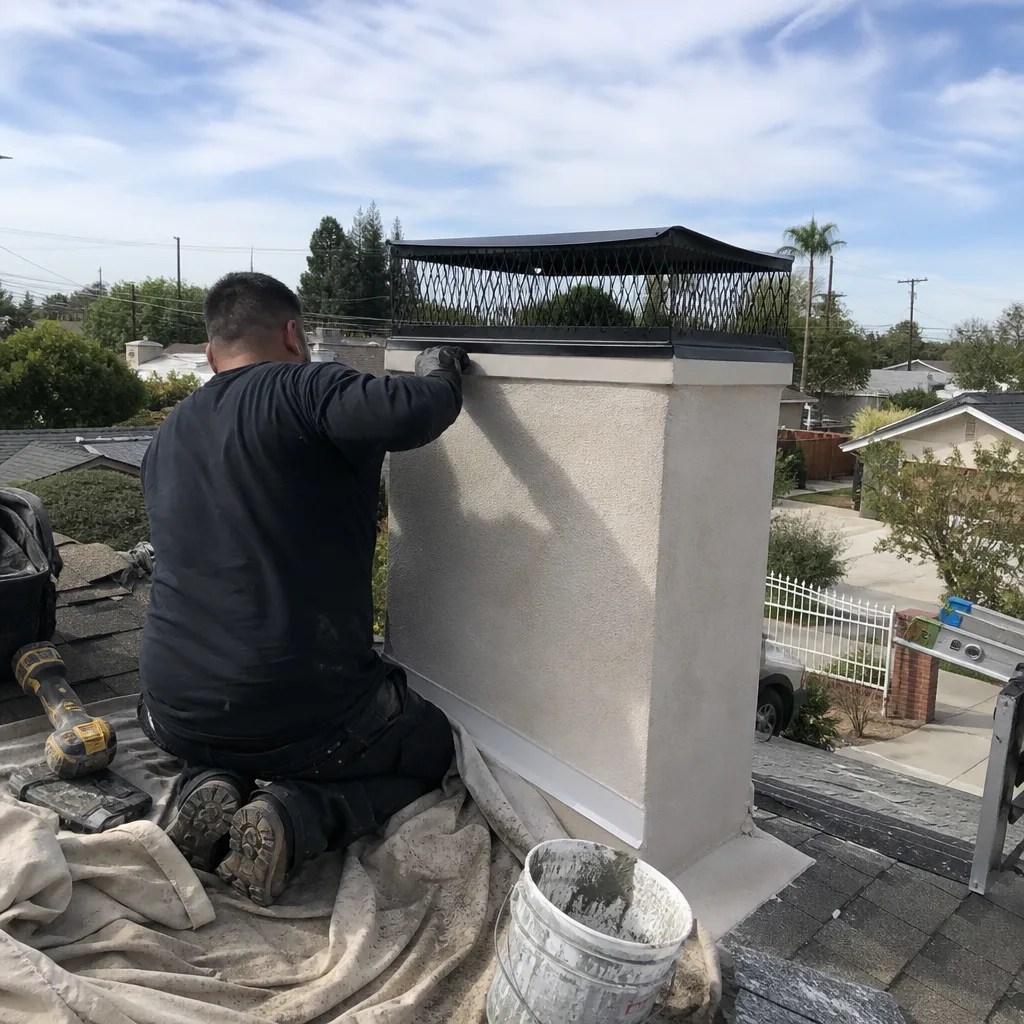
See the difference
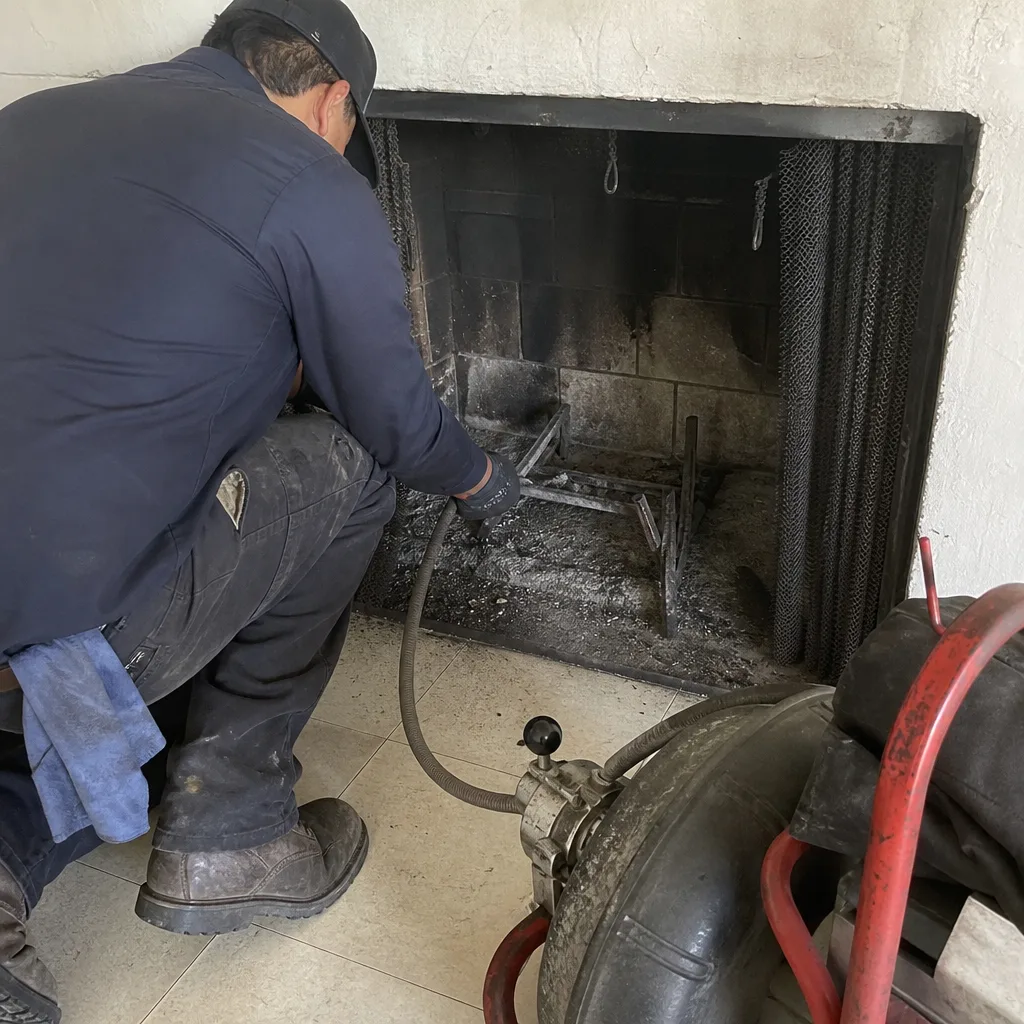 Before
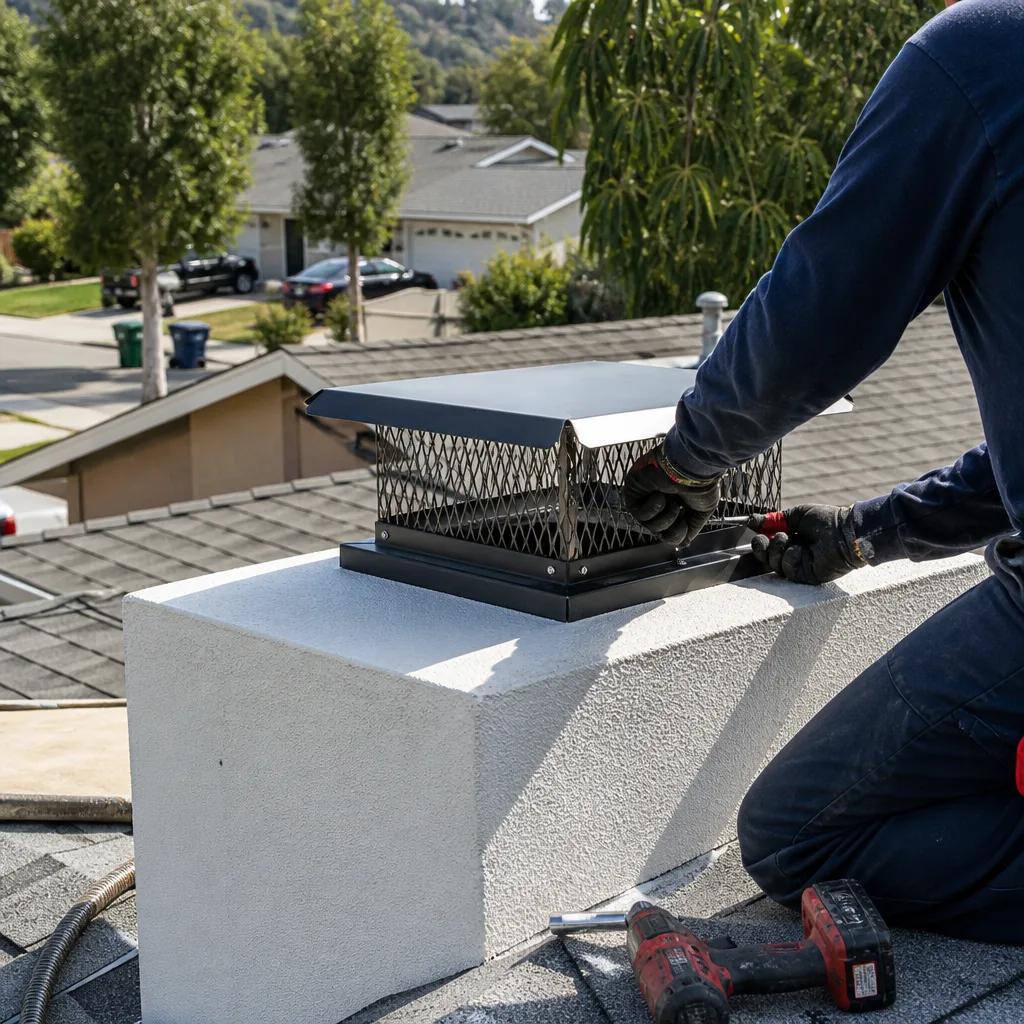 After
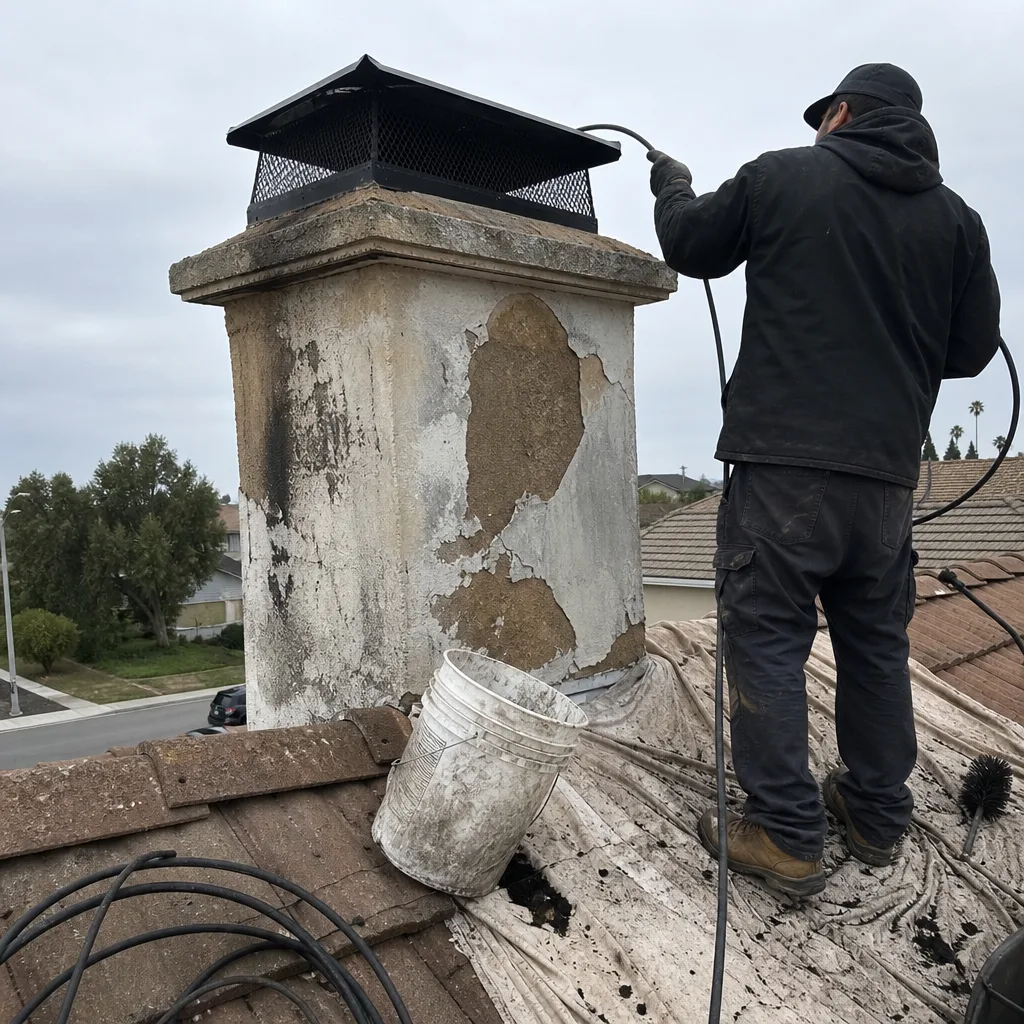 Before
 After
 Before
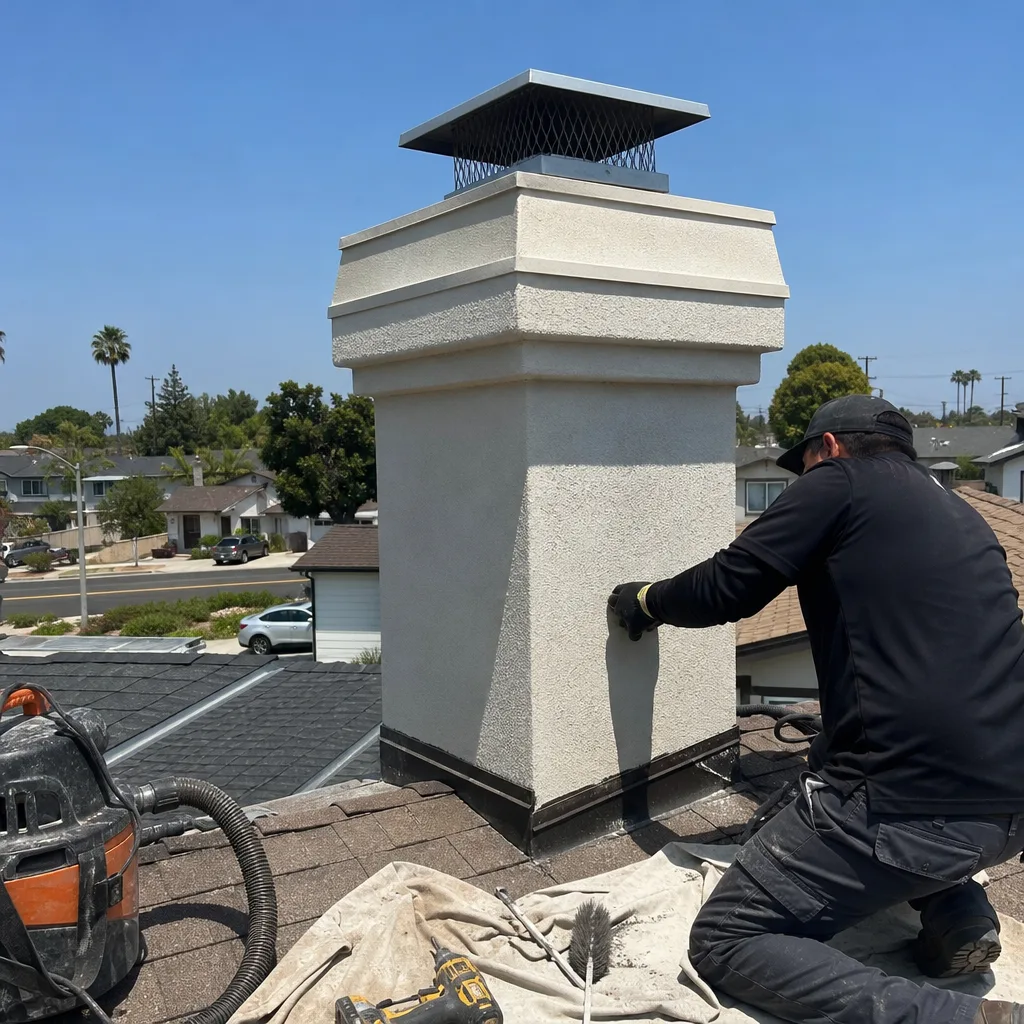 After