
Last updated November 2, 2026
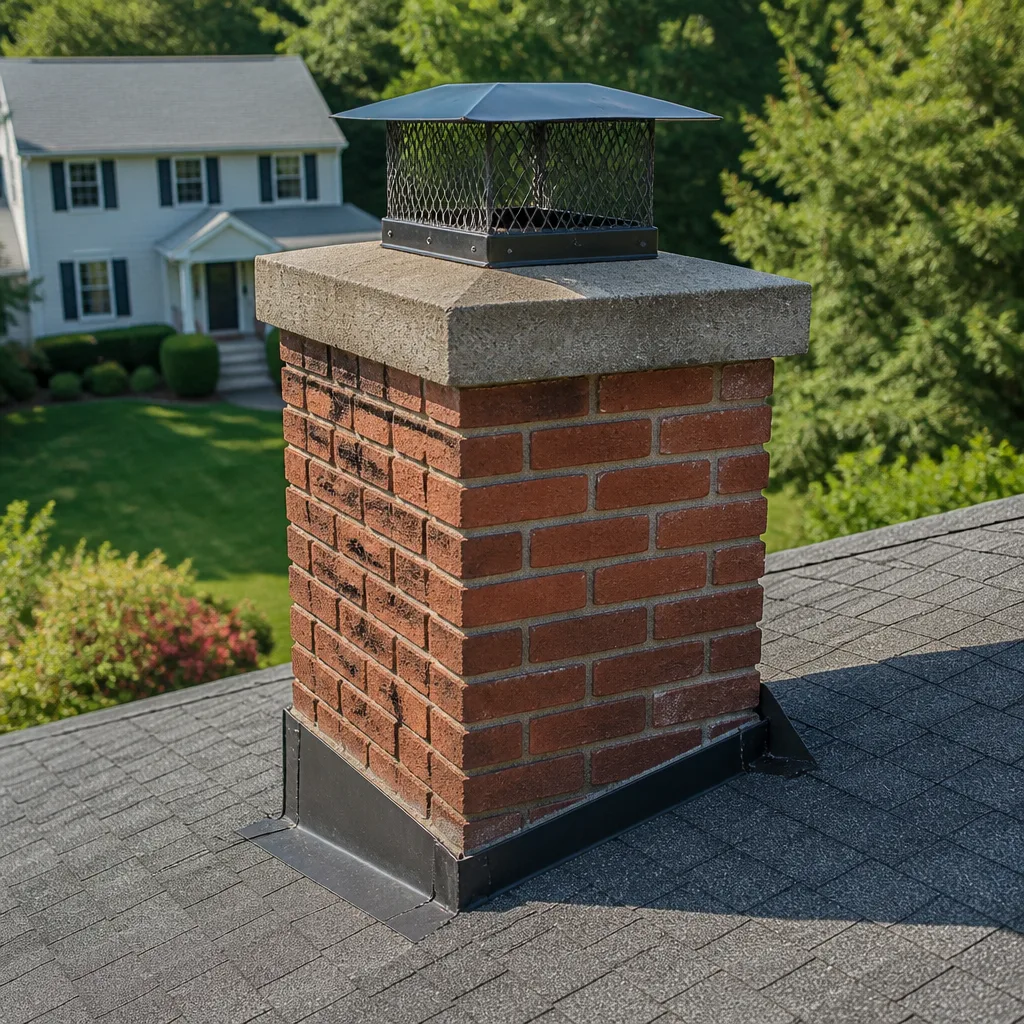 Sweep & inspection
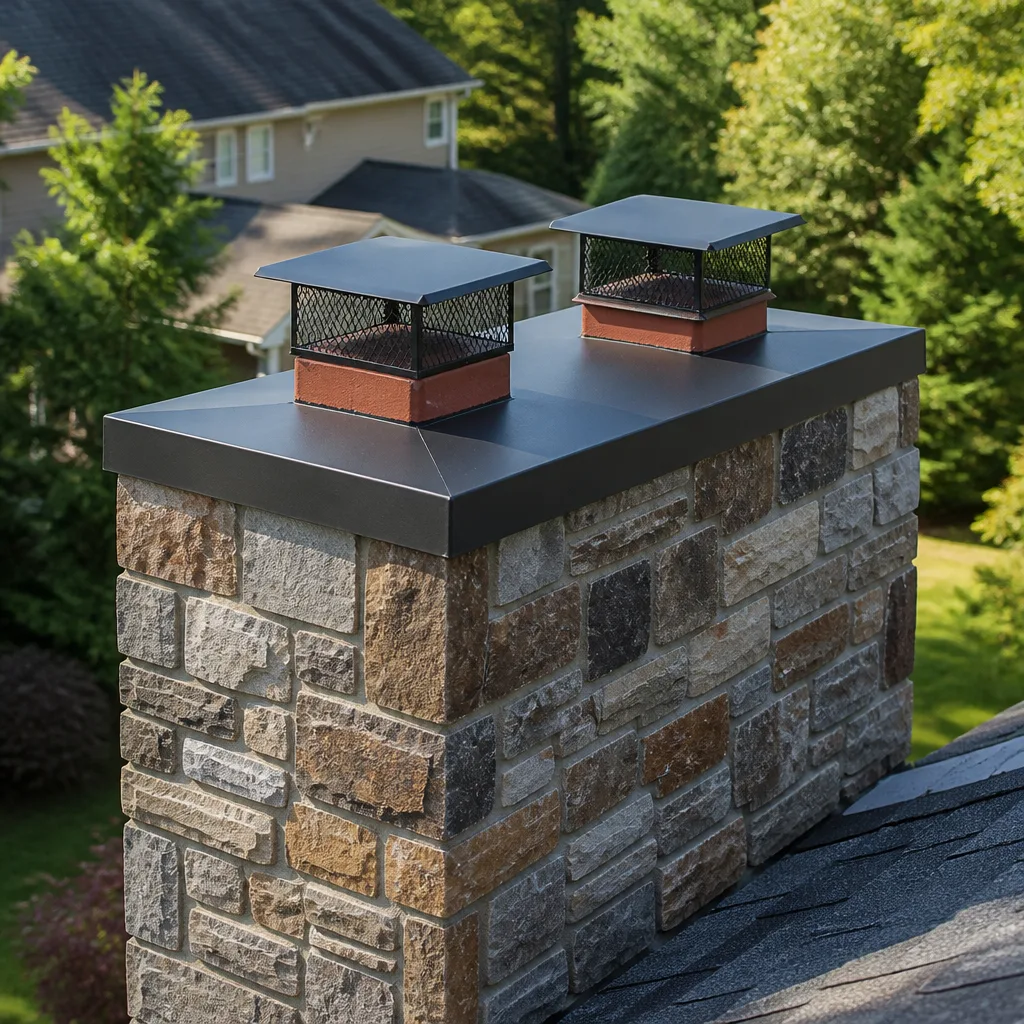 Caps & crowns
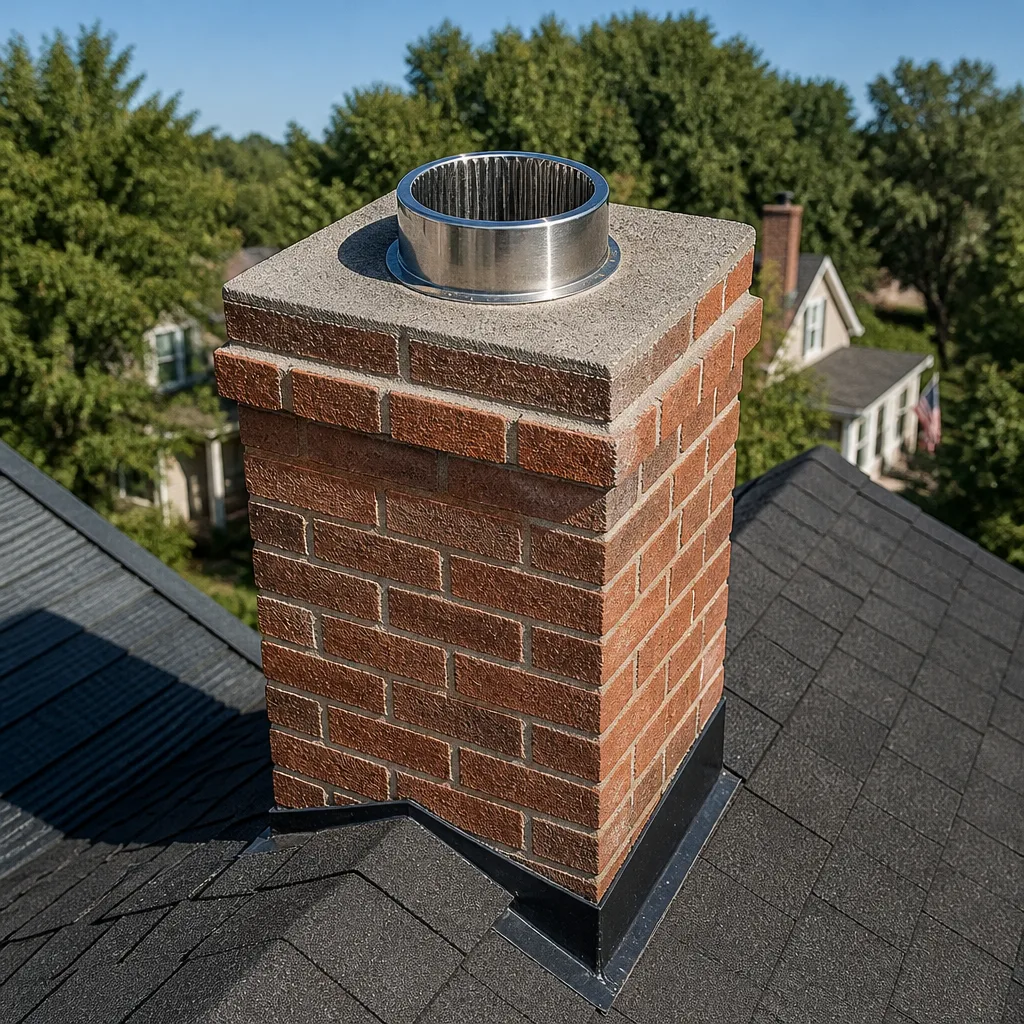 Flue relining
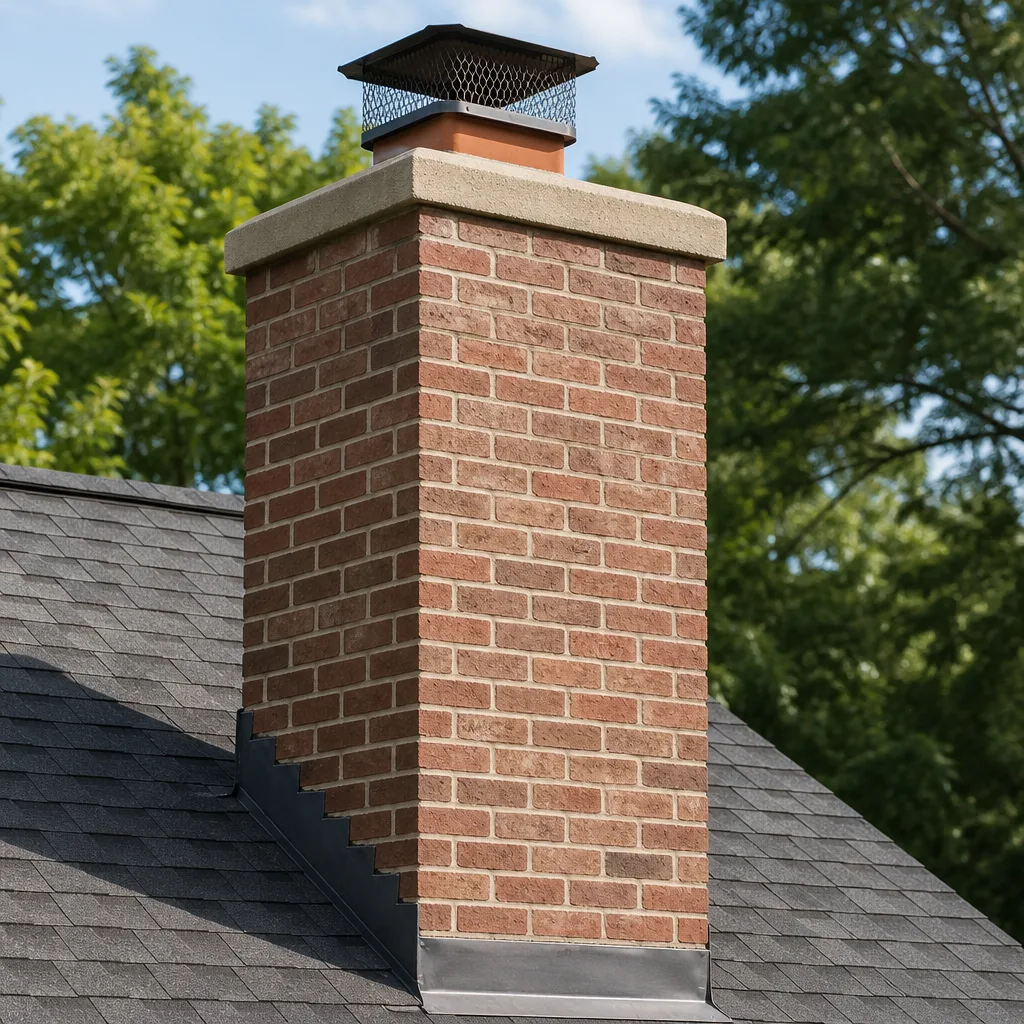 Masonry repair
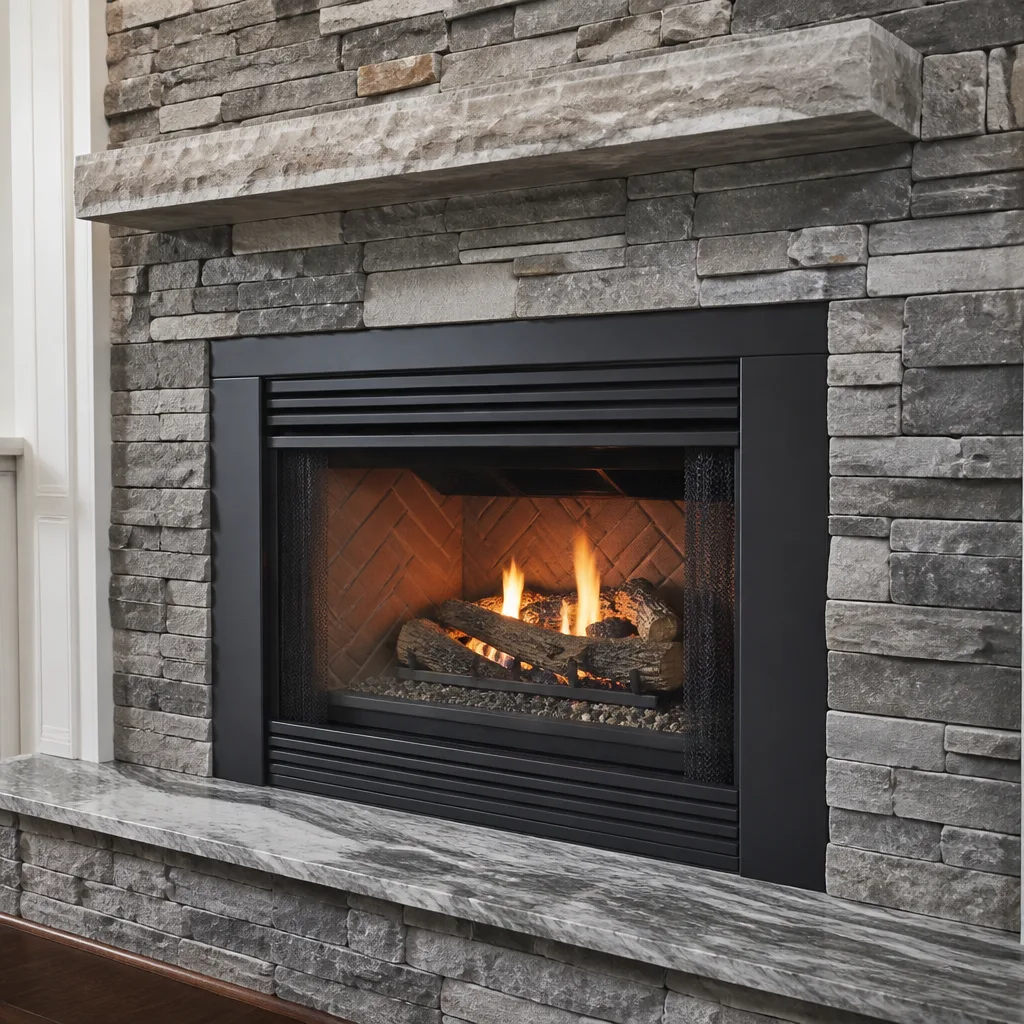 Gas fireplace service
Level 1 sweep and inspection to the NFPA 211 annual standard - flue, crown, cap, and flashing checked and photographed
Chimney sweep logs do not sweep chimneys. They loosen some creosote - which then falls where a brush and vacuum still have to collect it.
Chimney Sweep Troubleshooting: Common Problems and How to Fix Them
Smoke rolling into the living room when you open the damper isn’t always a dirty flue. Sometimes it’s a pressure imbalance caused by an exhaust fan running in the kitchen, a degraded smoke chamber creating turbulence, or a flue that was sized wrong for the firebox from the day the house was built. A Chimney Sweep on a structurally mismatched chimney just gives you a clean problem. In La Habra, where homes from the 1950s through 1980s make up much of the housing stock, we see the same handful of failure patterns repeat year after year. This guide walks you through the symptoms, traces each one to its actual cause, and tells you which fixes require a brush, which require a repair, and which require taking the fireplace out of service immediately. By the end, you’ll know exactly what you’re looking at when your chimney misbehaves.
Quick Answer
Most chimney problems present as one of five symptoms: backdrafting smoke, persistent odors, poor draw, water in the firebox, or a damper that won’t seal. For deeper context, see our The Complete Chimney Sweep Guide for La Habra Homeowners. Each symptom points to a specific failure point in the flue system, and fixing the symptom usually means addressing the structural cause behind it, not just sweeping the flue. In La Habra, where summer humidity and Santa Ana dry cycles alternate through the year, creosote behavior and masonry wear follow predictable seasonal patterns that make diagnosis more straightforward once you know what to look for.
Styles & brands we work with
- Sweep & inspection
- Caps & crowns
- Flue relining
- Masonry repair
- Gas fireplace service
Table of Contents
- Symptom-to-Cause Matrix: What Your Chimney Is Telling You
- Backdrafting: When Smoke Comes Back Into the Room
- The Summer Burning Smell: Why Your Chimney Smells in August
- Slow Draw: When the Fire Just Won’t Pull
- Water in the Firebox: The Leak That Isn’t Always a Leak
- Creosote Stages: Why Grade Three Changes Everything
- Damper Problems: The Seal That Matters Year-Round
- Common Mistakes to Avoid
- When to Call a Professional
- Frequently Asked Questions
- The Bottom Line
Symptom-to-Cause Matrix: What Your Chimney Is Telling You
A chimney never fails silently. The symptoms homeowners notice are diagnostic signals, and each one narrows the problem to a specific component of the flue system. Here’s the pattern we use when we troubleshoot chimneys in La Habra homes:
- Smoke backdrafting into the room when the fire is lit → Draft height problems, pressure imbalance from competing exhaust fans, or an undersized flue for the firebox opening. Occasionally a clogged spark arrestor cap.
- Burning smell in summer, especially on humid days → Glazed creosote absorbing moisture from the air, or a missing cap letting rain saturate accumulated soot. The humidity from the marine layer makes this worse in La Habra from June through August.
- Fire takes forever to establish a good draw, then burns fine → Cold flue column that needs priming, or partial obstruction restricting airflow until heat builds. Often worse in single-story homes with short chimneys.
- Water pooling in the firebox after rain → Failed crown, missing or improperly fitted cap, or spalling brick absorbing water higher up and bleeding it down. A Gelco or Famco cap that’s rusted through its seams will leak directly down the flue.
- Damper won’t close fully or won’t stay open → Warped damper plate from years of heat cycling, rusted pivot pins, or creosote buildup on the seating surface. This costs you conditioned air year-round.
- White staining on exterior brick or a white crust inside the flue → Water penetration through the masonry, which in a marine-influenced climate like La Habra’s means the freeze-thaw cycle is doing its work even though hard freezes are rare.
The key point: none of these symptoms is fixed by sweeping alone. Sweeping removes creosote and soot. It does not correct draft geometry, repair a crown, replace a damper, or resurface a deteriorated smoke chamber. A crew that shows up, runs a brush through the flue, and leaves without noting the structural diagnosis hasn’t solved the problem the homeowner was actually experiencing.
Backdrafting: When Smoke Comes Back Into the Room
Backdrafting is the symptom that gets the fastest response from homeowners because it’s unmissable. Smoke pours into the living room instead of up the flue. The immediate reaction is usually to assume the chimney is dirty, but backdrafting has mechanical causes that sweeping cannot address.
The three most common causes, in order of what we encounter in La Habra:
- Pressure imbalance in the house. Modern homes are tighter than older ones, and houses that have been renovated with new windows, added insulation, or upgraded HVAC systems often create negative pressure indoors. When a bathroom exhaust fan, kitchen range hood, or dryer runs, it pulls air out of the house. The chimney becomes the only opening left, and air rushes down it instead of up. This is why a fire can suddenly start smoking the moment someone turns on the range hood. The fix may be as simple as cracking a window during fires, but in persistent cases, a make-up air system or a draft-inducing cap from Olympia Chimney may be needed.
- Undersized flue for the firebox. A masonry fireplace with a large opening needs a flue of proportional cross-sectional area. If a previous owner rebuilt the firebox or changed the fireplace opening without resizing the flue, the system can’t move enough air volume. No amount of cleaning corrects this. The flue needs to be relined with a properly sized system. DuraFlex liner systems are sized to the firebox and appliance, and a correctly sized liner changes the entire air-volume equation.
- Deteriorated smoke chamber. The smoke chamber is the invisible transition zone between the firebox and the flue. It narrows upward and directs smoke into the flue opening. When the smoke chamber walls erode, crack, or develop gaps, the smooth airflow path becomes turbulent. Smoke stalls, cools, and spills back into the room. This damage is invisible from below without a camera inspection. HeatShield resurfacing addresses it by coating the smoke chamber walls with a ceramic material that restores the smooth, tapered profile smoke needs to enter the flue cleanly.
In our experience, La Habra homes built in the 1960s and 1970s frequently have smoke chambers that were parged with a thin coat of mortar that’s now crumbling. The heat from decades of fires, combined with the expansion and contraction from the area’s temperature swings, degrades that parge coat. A standard sweep will not catch this because most sweeps don’t camera the flue. We camera every chimney we inspect because backdrafting complaints are never solved by guessing.
The Summer Burning Smell: Why Your Chimney Smells in August
A fireplace that smells like a campfire in the middle of summer, on a day when no fire has burned for months, is reporting a creosote problem. Specifically, it’s reporting glazed creosote that’s absorbing moisture from humid air.
La Habra’s summer pattern is distinctive. The marine layer pushes inland on many summer mornings, raising relative humidity significantly before burning off by midday. During those humid hours, glazed creosote, which is the third-degree, tar-like form of creosote, absorbs water vapor from the air. The moisture releases the volatile organic compounds locked in the creosote, and those compounds drift down the flue into the house. The smell is strongest in the morning and on cloudy days, and it’s stronger in homes where the damper doesn’t seal completely.
Dry, flaky first-degree creosote and granular second-degree creosote don’t cause this odor, because they don’t absorb humidity the same way. The smell is a marker of third-degree glazed creosote present in the flue, which is also the most dangerous stage for chimney fires. It cannot be brushed out. Glazed creosote requires chemical treatment before mechanical removal. The process involves applying a manganese-based treatment that reacts with the hardened creosote and breaks it down into a removable form, followed by brush work.
The other cause of summer chimney odor is a missing or damaged cap. If a chimney lacks a Gelco or Famco cap, rain falls directly down the flue and saturates whatever soot and creosote remains on the flue walls. Wet soot, even first-degree, produces a stale, acrid smell that homeowners describe as “damp fireplace smell.” The fix is a properly fitted cap, and the right cap does double duty: it keeps water out and prevents animals from nesting, which is itself a serious airflow and odor problem.
If you smell the chimney in summer, the diagnostic order is: check for a cap, then assess creosote stage. If the cap is present and the smell persists, you’re almost certainly dealing with glazed creosote that needs chemical treatment. Book a chimney sweep with a camera inspection to confirm before anyone starts brushing.
Slow Draw: When the Fire Just Won’t Pull
A fire that struggles to establish upward draft for the first ten or fifteen minutes, then burns fine, is a classic cold-flue problem. The chimney is a vertical column of air, and when that air is cold and dense, smoke has to push it out of the way before it can flow upward. A short chimney makes this worse because there’s less column height to generate draft, and single-story La Habra ranch houses, which are common in the area’s older tracts, frequently have chimneys on the shorter side.
You can test for a cold-flue problem by priming the flue. Before lighting the fire, hold a lit piece of rolled newspaper up inside the damper opening for thirty seconds. If the smoke from the newspaper pulls upward, the flue is establishing draft, and you can then light your fire. If the newspaper smoke doesn’t pull upward even after priming, move to the next diagnostic step, which is checking for obstruction.
Slow draw that persists after priming usually means one of two things:
- Debris-blocked cap or spark arrestor. Spark arrestor mesh on unlisted caps is a common obstruction point. Bird nests, leaf litter, and even soccer balls end up blocking the cap, and the result is a restricted exhaust outlet. Homes near La Habra’s mature eucalyptus trees see more cap debris than most because eucalyptus leaves are long, tough, and they mat together densely when wet. A cap with a rounded spark arrestor design, like the Copperfield caps we stock, sheds debris more effectively than older flat-top designs.
- Flue sizing mismatch. This is the harder diagnosis because the chimney looks normal from the outside. If the flue cross-section is too small for the firebox opening, the system can never move enough air, and the fire will always be sluggish. This is a structural condition, not a cleaning issue. The fix is relining with a correctly sized liner, and we use DuraFlex for these jobs because it’s available in the full range of diameters and can be fitted to the existing chimney structure.
Older masonry chimneys sometimes have tile flue liners that shifted or cracked and partially collapsed inward. A cracked tile that’s leaning across the flue path creates a restriction that behaves exactly like a partial blockage. Camera inspection identifies this in minutes. If the flue has failed, the solution may be HeatShield resurfacing to restore the liner walls, which is significantly less invasive than tearing out the old tile and rebuilding the flue.
Water in the Firebox: The Leak That Isn’t Always a Leak
Water showing up in the firebox after rain is almost always a crown or cap problem, but the path the water takes can be indirect enough that homeowners misdiagnose it as a roof leak. The water that pools in your firebox may have entered the chimney twenty feet above and traveled down through the masonry before exiting at the firebox level.
The crown is the concrete or mortar cap at the top of the chimney, and it’s the single most common point of water entry on masonry chimneys. A crown should slope away from the flue opening and overhang the chimney walls slightly, directing water off the masonry entirely. In practice, many crowns in older La Habra homes are flat, cracked, or made from the same mortar as the chimney body, which is porous and absorbs water. Once the crown cracks, water enters the chimney structure directly.
The second common entry point is the cap. A missing or rusted Gelco or Famco cap lets rain fall straight down the flue. A cap with rusted seams does the same thing more slowly. The fix here is straightforward: replace the cap with a stainless steel unit sized to the flue, and if the crown is compromised, repair or recast it.
The third path is masonry absorption. Brick and mortar both absorb water, and in a climate like La Habra’s, where rain is infrequent but can come in heavy bursts during winter storms, water that saturates the brick high on the chimney can migrate downward through the masonry and emerge at the firebox. White efflorescence staining on exterior brick is the tell. The fix involves repairing any cracked or spalling brick, applying a breathable water repellent to the masonry, and ensuring the crown and cap are doing their jobs.
Here’s the diagnostic sequence we follow:
- Check for a cap. If missing, that’s the likely entry point, and the fix is immediate.
- Inspect the crown from the roofline. Look for cracks, flat spots, and separation from the flue tile.
- Look for efflorescence on the exterior brick. If present, masonry absorption is contributing, and water is moving through the brick itself.
- Camera the flue. Interior water staining on the flue walls shows how far down the water is traveling and whether the liner itself has been damaged by the moisture.
Water that sits in the firebox or soaks into the masonry is doing silent damage year-round. In a place with La Habra’s mild winters, homeowners sometimes put this off because the chimney “still works.” By the time the damage is visible, it’s usually more expensive to correct.
Creosote Stages: Why Grade Three Changes Everything
The single most important concept in chimney maintenance is that creosote is not one substance. It exists in three distinct stages, and the stage matters more than the total quantity because the stage determines what can be removed with a brush, what requires chemical treatment, and what constitutes an immediate fire hazard.
Here’s what each stage looks like and what it means in practice:
- First-degree creosote: Flaky, soot-like, and dry. This is what accumulates during efficient, hot fires. It brushes off flue walls reasonably well during a standard sweep. It is combustible but not the highest-risk form. Most fireplaces burning seasoned hardwood with adequate draft will produce first-degree creosote.
- Second-degree creosote: Granular and shiny, like coffee grounds mixed with tar. This forms during cooler fires, particularly in shoulder-season burning when the fire smolders rather than burns hot. It’s harder to remove than first-degree and requires more mechanical effort. Second-degree creosote buildup is common in La Habra homes where fireplaces are used on mild evenings rather than for extended cold-weather heating, because the fires never get hot enough to create efficient combustion.
- Third-degree (glazed) creosote: A hard, shiny, tar-like layer fused to the flue wall. This forms when combustion gases condense rapidly on a cool flue surface, which happens in chimneys that run cold, chimneys with restricted airflow, and chimneys attached to fireplaces used for casual ambience fires. Glazed creosote is the leading cause of chimney fires. It is also chemically stubborn: a rotary brush will skate across it without removing it in anything beyond a thin surface layer.
Third-degree creosote cannot be brushed out. The legitimate process for removing it is chemical treatment followed by mechanical removal. The treatment, usually a manganese-based catalyst, is applied to the flue walls and chemically alters the hardened creosote, breaking it down into a removable form over a period of time or through repeat applications. After the glazed creosote has been converted, standard brush work removes the residue.
If a sweep tells you glazed creosote “brushed right out,” they either didn’t get it all or they’re describing something that wasn’t actually third-degree. In our shop, glazed creosote jobs are camera-confirmed before any work starts, and the after-photos tell the same story: the flue surface should be bare tile or bare metal. No tar sheen remaining.
Burning seasoned hardwood is the single best prevention against third-degree creosote in La Habra. The wood should be split and stacked for at least six to twelve months. The warm, dry Santa Ana periods in the fall are actually excellent for seasoning wood quickly, but the wood has to be set up to take advantage of them.
Damper Problems: The Seal That Matters Year-Round
A damper that doesn’t seal properly costs you money twelve months of the year, whether or not you ever light a fire. In summer, a poorly sealing damper lets conditioned air escape up the chimney and lets humid outdoor air in, which worsens the summer creosote odor problem. In winter, it lets heated air leave the house even when the fireplace isn’t in use. It’s the single most neglected air-sealing problem in older homes.
The common damper failure modes:
- Warped damper plate. The damper plate sits directly in the fireplace opening and is exposed to the full heat of the fire. Over years of heat cycling, the cast iron warps, and the once-flat seating surface develops gaps. Once warped, a damper will never seal tightly again, and the fix is replacement.
- Rusted pivot pins or a seized pivot mechanism. The damper rotates on pins or hinges at the throat of the fireplace. When those rust, the damper either won’t move at all or moves with resistance and then won’t seat. Coastal-influenced humidity in La Habra accelerates rust on exposed steel components.
- Creosote buildup on the seating surface. This is the easiest to fix: the damper can’t close fully because the seating ledge has a layer of creosote physically blocking it. A sweep solves this. The other two failure modes require damper replacement or repair.
- Missing handle or broken linkage. Some dampers are controlled by a rotary handle or a push rod that’s been snapped off or stripped. The damper plate itself may be fine, but without the linkage, it can’t be operated.
A top-sealing damper is the modern solution for a throat damper that’s failed. It installs at the top of the flue and seals with a gasket, which provides a far better air seal than any throat damper can, especially one that’s warped. Top-sealing dampers also keep rain out and act as a first line of defense against animal entry.
The test for a bad damper seal is simple: close the damper fully, then hold a lit match or lighter near the edge of the closed damper. If the flame flickers or bends, air is moving through the gap. You’re paying to heat or cool the outdoors. In our La Habra service calls, we find failed dampers on a significant share of older fireplaces that have never had the damper serviced.
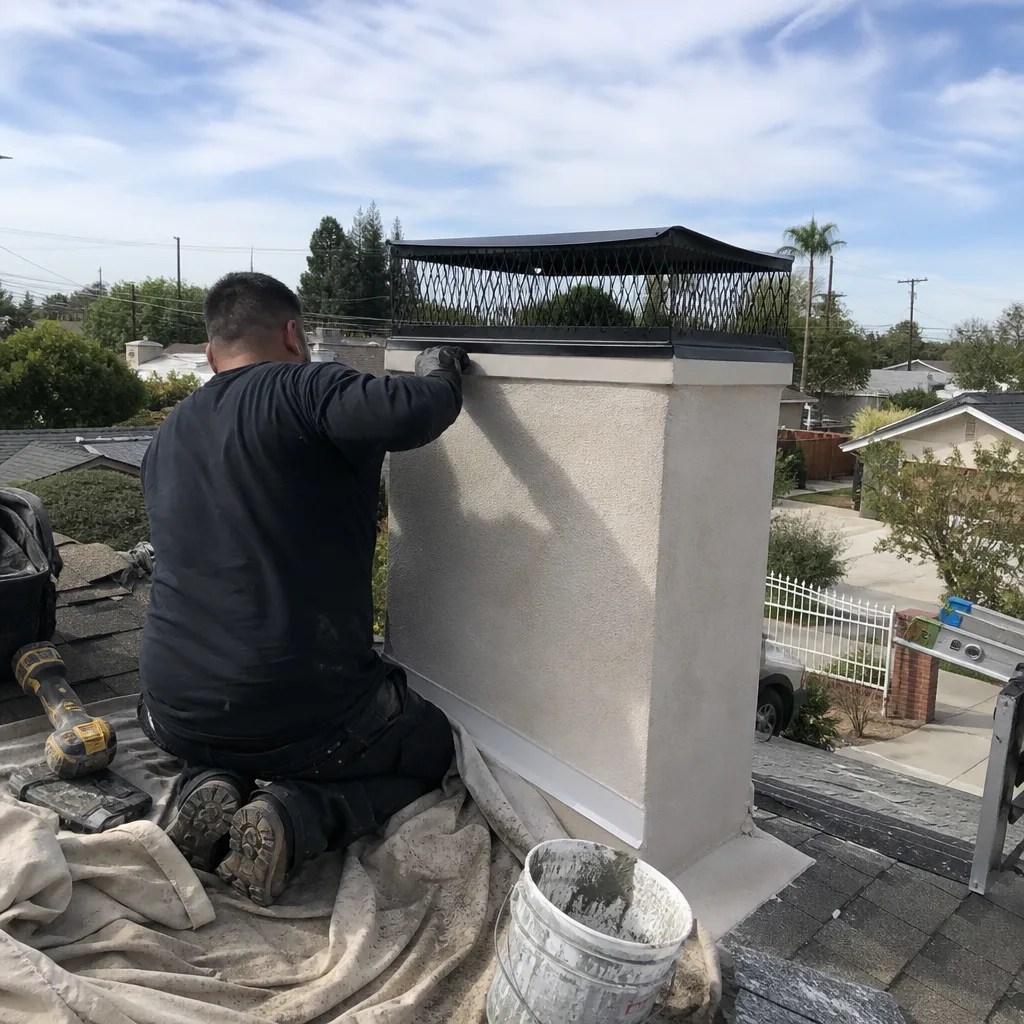
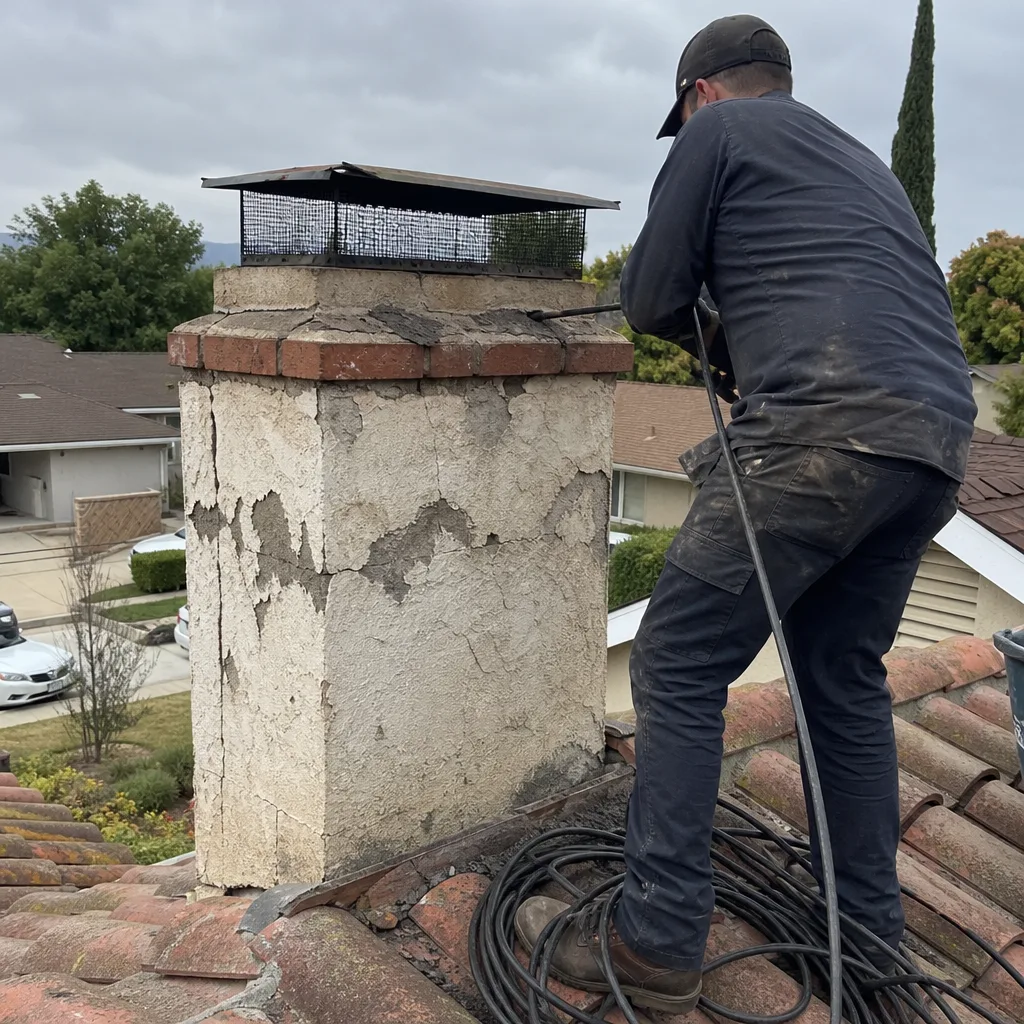
See the difference
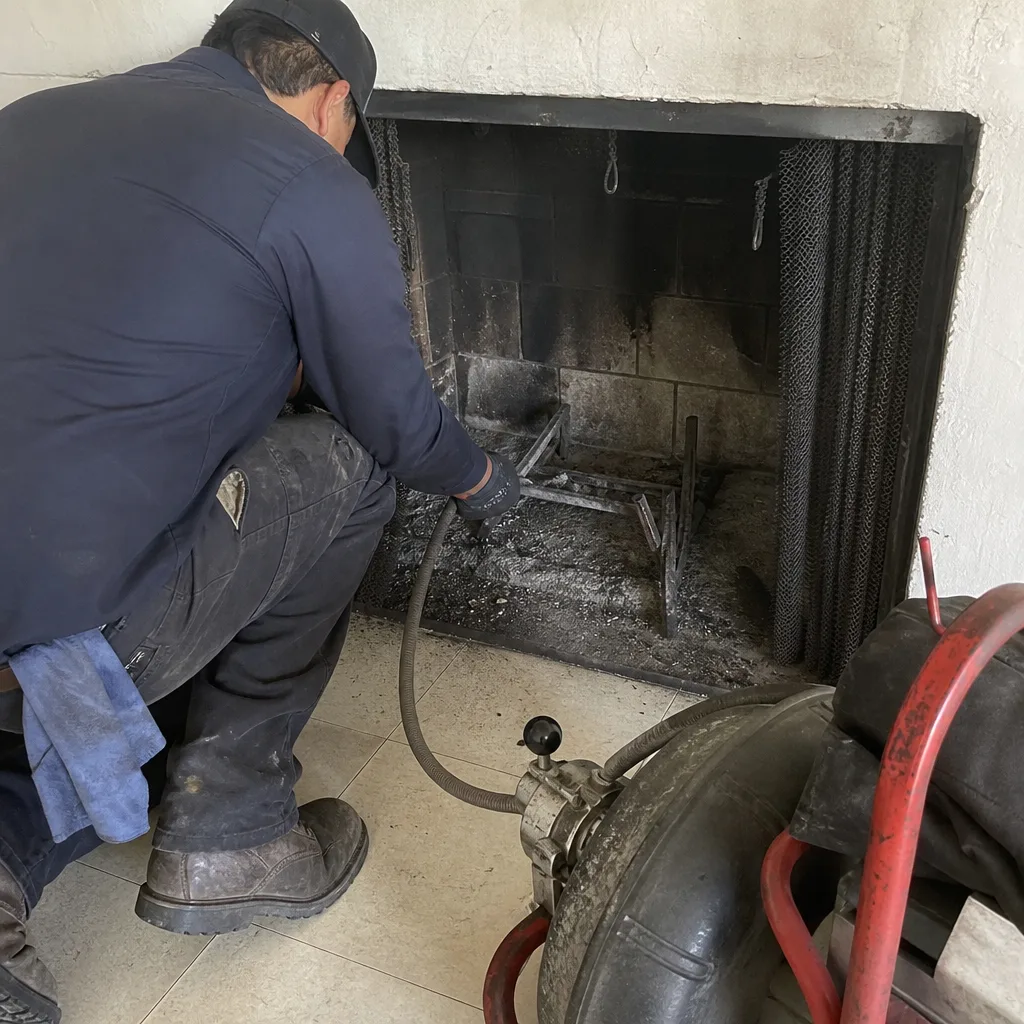 Before
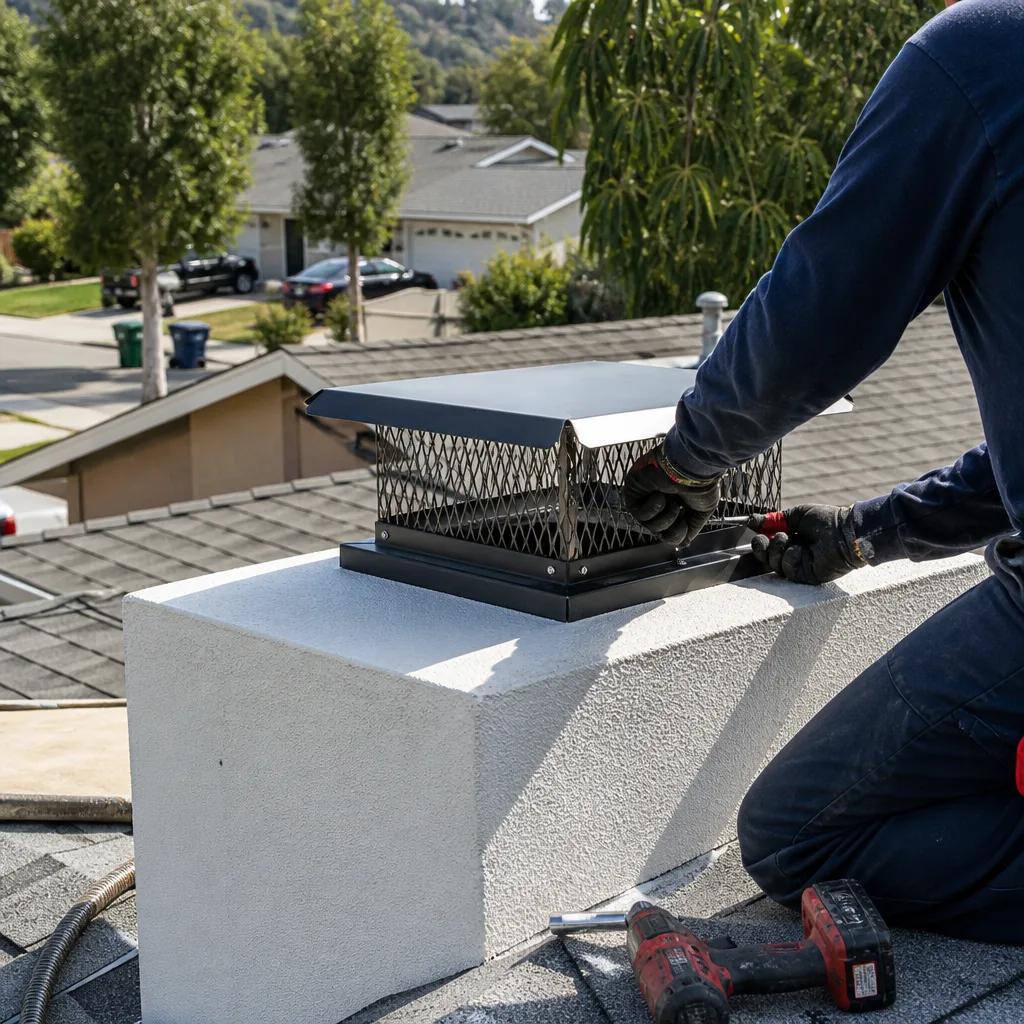 After
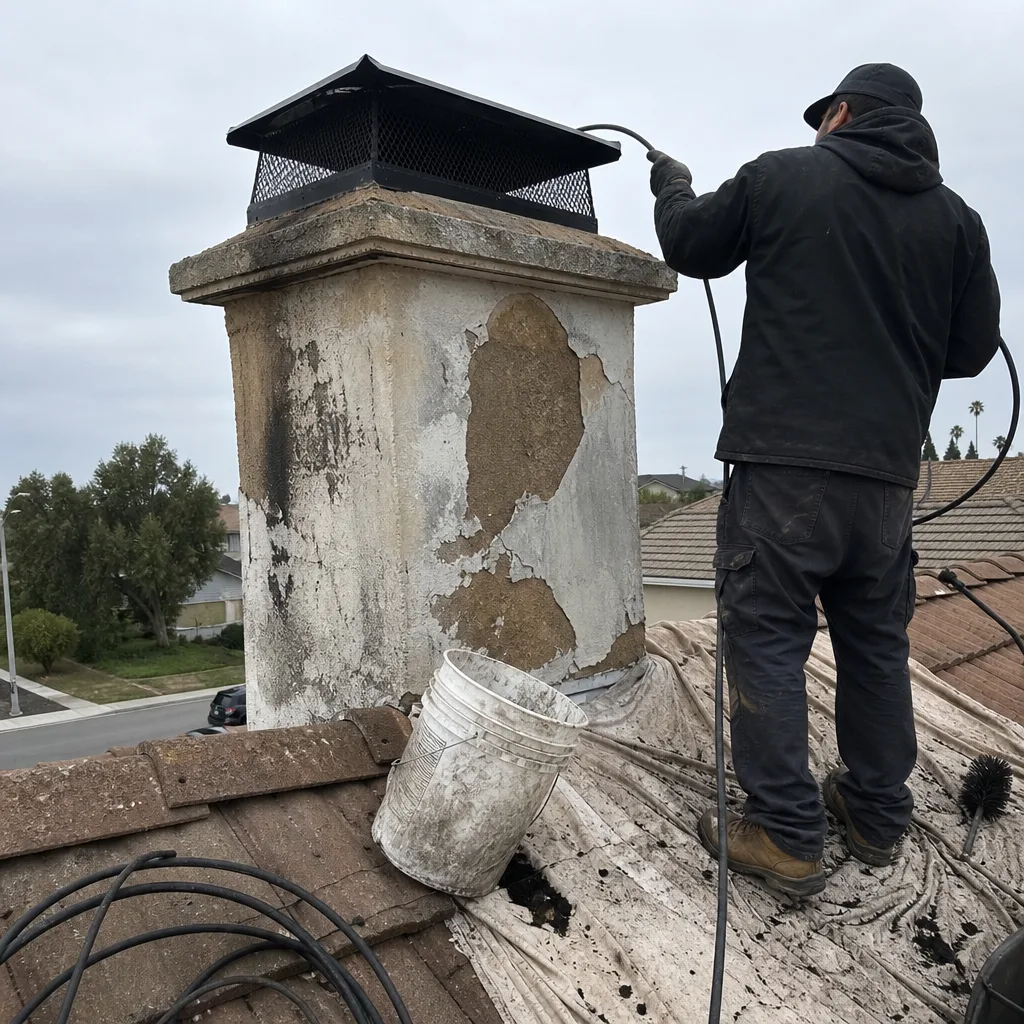 Before
 After
 Before
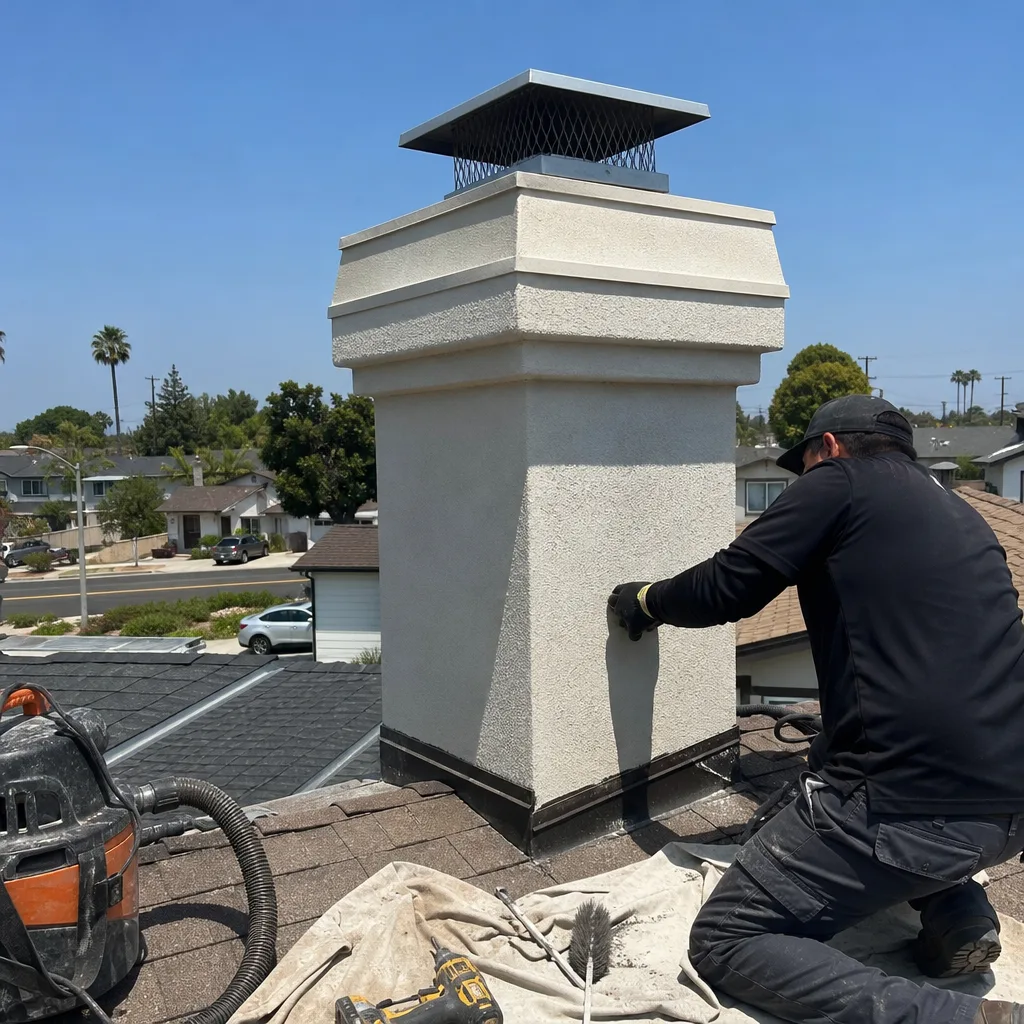 After
How La Habra’s Climate Accelerates Chimney Problems
The San Gabriel Valley climate does specific, predictable things to chimneys, and knowing the pattern helps homeowners anticipate problems before they become expensive. Explore more guides & resources for year-round maintenance tips.
The marine layer and creosote. La Habra sits far enough inland that the marine layer doesn’t dominate the coast the way it does in Long Beach or Huntington Beach, but it does push inland on summer mornings with regularity. High morning humidity condenses on flue walls, and when glazed creosote is present, that moisture triggers the odor release described earlier. The same moisture cycle also accelerates corrosion on steel components: damper hardware, cap seams, and liner fasteners.
Santa Ana dry cycles and masonry movement. Santa Ana winds bring extremely low humidity, often below 10 percent for days at a time. Masonry that absorbed moisture expands, then contracts as it dries during Santa Ana events. This expansion-contraction cycle, repeated year after year, opens hairline cracks in crowns and mortar joints. Those cracks become water entry points when the rains return. It’s a slow cycle, but it’s relentless, and homes from the 1960s and 1970s in La Habra have now been through fifty to sixty of these cycles.
Mild winters and inefficient fires. Because La Habra doesn’t experience sustained cold winters, fireplaces here are used differently than in mountain communities. Fires are short, ambience-driven, and often burned with whatever wood is available. Short, cooler fires produce second-degree creosote. If the wood isn’t fully seasoned, which is common when homeowners buy a bundle from a gas station or grocery store, the fire burns even cooler and wetter, accelerating creosote deposition. This is why we emphasize wood selection as much as sweep frequency: a chimney in La Habra with a casual burning pattern can build glazed creosote faster than a mountain cabin chimney that’s run hot every night all winter.
For a deeper look at how we approach chimney maintenance in this area specifically, see our guide to Chimney Sweep in South San Jose Hills, which covers maintenance scheduling for homes in the neighboring hills communities.
Common Mistakes to Avoid
- Treating backdraft as a dirty flue. A chimney that’s been recently swept and still backdrafts doesn’t need another sweep. It needs a draft analysis. Throwing more cleaning at a pressure problem wastes money and doesn’t stop the smoke from coming into the room.
- Ignoring summer chimney odor. The “campfire smell” in August is a creosote signal. Waiting until burn season to address it gives glazed creosote months to absorb humidity and off-gas into the house, and it leaves a chimney fire hazard in place through the summer.
- Burning unseasoned wood to save money. Wet wood creates cooler fires, produces more creosote per fire, and delivers less heat. The savings on wood are lost on the next sweep, and in a La Habra climate where casual burning already produces second-degree creosote, unseasoned wood pushes the chimney toward glazing faster.
- Using a DIY “creosote log” as a substitute for sweeping. These logs can alter creosote chemistry in first-degree deposits, but they do not remove creosote. Using them in place of an annual inspection gives you a false sense of security, and the chimney continues to accumulate combustible material.
- Painting or sealing exterior brick with latex paint. Brick needs to breathe. Sealing it with paint traps moisture inside the masonry, which then breaks down the mortar from the inside. If water repellent is needed, it should be a breathable masonry product, not household paint.
- Replacing a cap without evaluating the crown. A new cap does nothing if the crown underneath it is cracked and letting water into the masonry. The cap and crown work as a system, and both need to be functional for water protection to work.
- Delaying repairs on a working chimney. A cracked crown, a warped damper, or a flue with spalling tile doesn’t become cheaper because you waited. The repair cost compounds as moisture and heat continue to do damage. In La Habra, where the climate does slow, continuous work on masonry, time is not on the chimney’s side.
How HeatShield Restoration Fixes What Sweeping Can’t
Most homeowners have never heard of flue resurfacing, and that’s a gap in the market’s knowledge. When a flue liner deteriorates, the traditional fix is full liner replacement, which means breaking out the old clay tile and installing a new liner system. That’s a major job. HeatShield offers a middle path.
HeatShield is a ceramic-based restoration system that resurfaces the interior of a deteriorating flue. It’s applied as a coating that bonds to the existing liner walls, restoring a smooth, continuous surface without demolishing the old tile. It’s not a patch. When installed by a certified applicator, it restores the flue to a functional state that addresses the core problems of a deteriorating liner: gaps that leak heat, rough surfaces that trap creosote, and cracks that allow combustion gases to escape into the chimney structure.
There are two situations where HeatShield is the right call in the homes we see in La Habra:
- Smoke chamber deterioration. As described earlier, the smoke chamber is the turbulence zone. When its parge coat fails, smoke stalls and spills. HeatShield can be applied to the smoke chamber walls to restore the smooth, sloped surface smoke needs to transition cleanly into the flue. This is a repair that addresses a smoke spillage problem at its source, and it’s a capability most local sweeps don’t offer because they’re not equipped for anything beyond cleaning.
- Flue liner cracking without full structural failure. When the clay tile liner shows heat cracks or minor gaps but the chimney structure itself is sound, full relining may be overkill. HeatShield restores the liner surface, seals the gaps, and extends the serviceable life of the existing system. For a homeowner who wants the problem fixed correctly without the cost and disruption of a full relining job, it’s the right tool.
The diagnostic prerequisite for any HeatShield recommendation is a camera inspection. You should never accept a recommendation to resurface a flue based on a visual inspection from the rooftop or the firebox. The camera shows the actual condition of the liner walls, and the after-camera shows the restoration work. If a company can’t or won’t show you camera footage, get another company. Learn more about this on our Chimney Repair in South San Jose Hills page, which details repair options for flue deterioration.
When a liner has fully failed, meaning large sections have collapsed or the structural integrity is gone, HeatShield isn’t the answer. Those jobs call for a full relining with a DuraFlex liner system, which is a flexible stainless steel liner sized to the firebox and installed through the existing chimney. DuraFlex is the professional standard for relining, and we stock it for full replacement jobs because relining is a service a homeowner should never have to wait weeks for.
When to Call a Professional
You should take the fireplace out of service and schedule an inspection immediately if you see any of these: smoke entering the living space during fires, a strong burning smell when no fire has been lit for weeks, water pooling in the firebox, or a chimney fire event, which often sounds like a freight train or a loud roaring in the chimney. A chimney fire rarely looks like what people expect: it’s usually contained inside the flue and not visible from the outside, but the damage it leaves behind, cracked liners and compromised mortar joints, makes the chimney unsafe for further burning until it’s been inspected and repaired.
For everything else, schedule an inspection before the burn season starts. A fall inspection catches summer damage and gives you the full winter season to use the fireplace safely. Chimney Sweep La Habra home offers free estimates in La Habra, and we carry the repair materials on the truck, which means a single visit can handle the sweep, the inspection, and the fix. Call (866) 747-8330.
Frequently Asked Questions
A standard chimney sweep and inspection in La Habra typically ranges from $150 to $300, with the variation driven by creosote stage, flue height, and whether the chimney has been regularly maintained. Glazed creosote removal that requires chemical treatment is a longer job and costs more, usually $200 to $500 above the base sweep. A straight sweep on a well-maintained chimney is at the lower end. Call (866) 747-8330 for an exact quote, estimates are free.
Not necessarily. If your flue liner has minor cracking or surface deterioration but the chimney structure is sound, HeatShield resurfacing can restore the liner without full replacement. Full relining with a DuraFlex liner system is reserved for liners that have structurally failed, meaning large sections are collapsed or missing. A camera inspection is the only way to know which category your chimney falls into, and you should insist on seeing the camera footage before accepting any liner recommendation.
The National Fire Protection Association standard is inspection at least once per year, with sweeping performed whenever creosote buildup reaches 1/8 inch or more on the flue walls. For most La Habra homeowners who burn casual fires during the winter months, that means a sweep once per year, scheduled in early fall before burn season. Homes that burn frequently or burn unseasoned wood may need sweeping twice per year.
Creosote accumulates, and because creosote is combustible, the risk of a chimney fire rises steadily. Simultaneously, moisture intrusion through a cracked crown or missing cap degrades the masonry from within. You end up with a chimney that’s both a fire hazard and a structural problem, and the repair bill is compounding with every season you defer. A $250 sweep is cheaper than a $3,000 relining job. Call (866) 747-8330 to schedule an inspection and see exactly where your chimney stands.
Hardware store chimney brushes are designed to knock loose first-degree soot, which is the easiest form of creosote. They won’t identify damage to the flue liner, the smoke chamber, the crown, or the damper. And if the chimney needs a professional repair, sweeping it yourself just exposes the underlying damage without informing you that it’s there. A professional sweep includes a camera inspection that tells you what a brush alone never will.
It accelerates corrosion and contributes to the summer odor problem, but the marine layer itself isn’t the primary threat. The bigger issue in La Habra is the alternating wet-dry cycle, where moisture from rain and morning humidity penetrates small cracks, then the Santa Ana dry periods shrink and stress the masonry. Over decades, that cycle opens bigger cracks. The damage is slow, but it’s continuous, and it’s why older chimneys in the San Gabriel Valley tend to show crown deterioration by their fortieth or fiftieth year.
A chimney sweep removes creosote from fireplace flues and inspects the chimney structure for damage. A dryer vent cleaning addresses a completely different system: the duct that exhausts your clothes dryer. Both matter for fire safety. Lint-clogged dryer vents are the second leading cause of residential fires, and we offer Dryer Vent Cleaning in South San Jose Hills through the same appointment. Many of our La Habra customers schedule both services together because both systems deal with combustible buildup and exhaust airflow, and the inspection principles are similar.
The Bottom Line
Chimney problems are diagnostic puzzles, not mysteries. Smoke backdrafting points to draft or geometry issues. Summer odor points to glazed creosote or a missing cap. Water in the firebox points to a failed crown or cap. Slow draw points to a restriction or an undersized flue. Each symptom has a traceable cause, and the correct fix is the one that addresses the cause, not the one that just makes the symptom go away by running a brush through the flue. In La Habra, where older housing stock meets a climate that cycles between marine moisture and desert-dry Santa Anas, these failure patterns are predictable enough that an experienced technician can diagnose most of them before setting foot on the roof. The ones that require a camera to confirm are the ones where a camera should be non-negotiable. Sweep annually, fix problems at the source, and never accept a structural recommendation without seeing the footage.
Written by the team at Chimney Sweep La Habra, serving La Habra since 2014.